






















You probably think you know your dog pretty well. But the more interesting question is how well your dog knows you. The YouTube video "15 Scary-Accurate Things Your Dog Knows About You," posted by the channel Charlie Paws, explores the science and research behind just how deeply dogs read their owners, picking up on everything from hormone shifts and emotional states to household social dynamics and the exact moment you stop paying attention to them. The findings are genuinely remarkable. Dogs are not simply watching you. They are studying you, constantly, and with a level of precision that goes far beyond what most people give them credit for.
At Good Natured Brand, we share our homes with our dogs every single day. They sleep on our laundry, pad across our carpets, and sit beside us through our best and worst moments. Understanding just how much they perceive makes that relationship feel even more meaningful. And it is a good reminder that the home we share with them deserves the same care and thoughtfulness we put into every other part of the bond.
Here is everything your dog already knows about you.
Your Dog Smells Your Sadness Before You Show It
Most people assume dogs come to comfort them because they see tears or hear crying. But the reality is more extraordinary than that. Dogs detect cortisol, the hormone the human body releases in response to stress and emotional distress, well before any visible sign of sadness appears. By the time you are actually crying, your dog has already known something was wrong for a while.
This explains something many dog owners have experienced but never fully understood: the dog who quietly rests their head on your knee for no obvious reason, or who crosses the room to sit beside you during a moment you thought you were holding together fine. They are not reacting to what they can see. They are reacting to what they can smell. Dogs can detect cortisol at concentrations far below what any human instrument can measure, and they associate that chemical signal with distress in the people they are bonded to.
It is one of the clearest examples of how dogs operate on a sensory level that runs completely parallel to our own, picking up information we do not even know we are broadcasting.










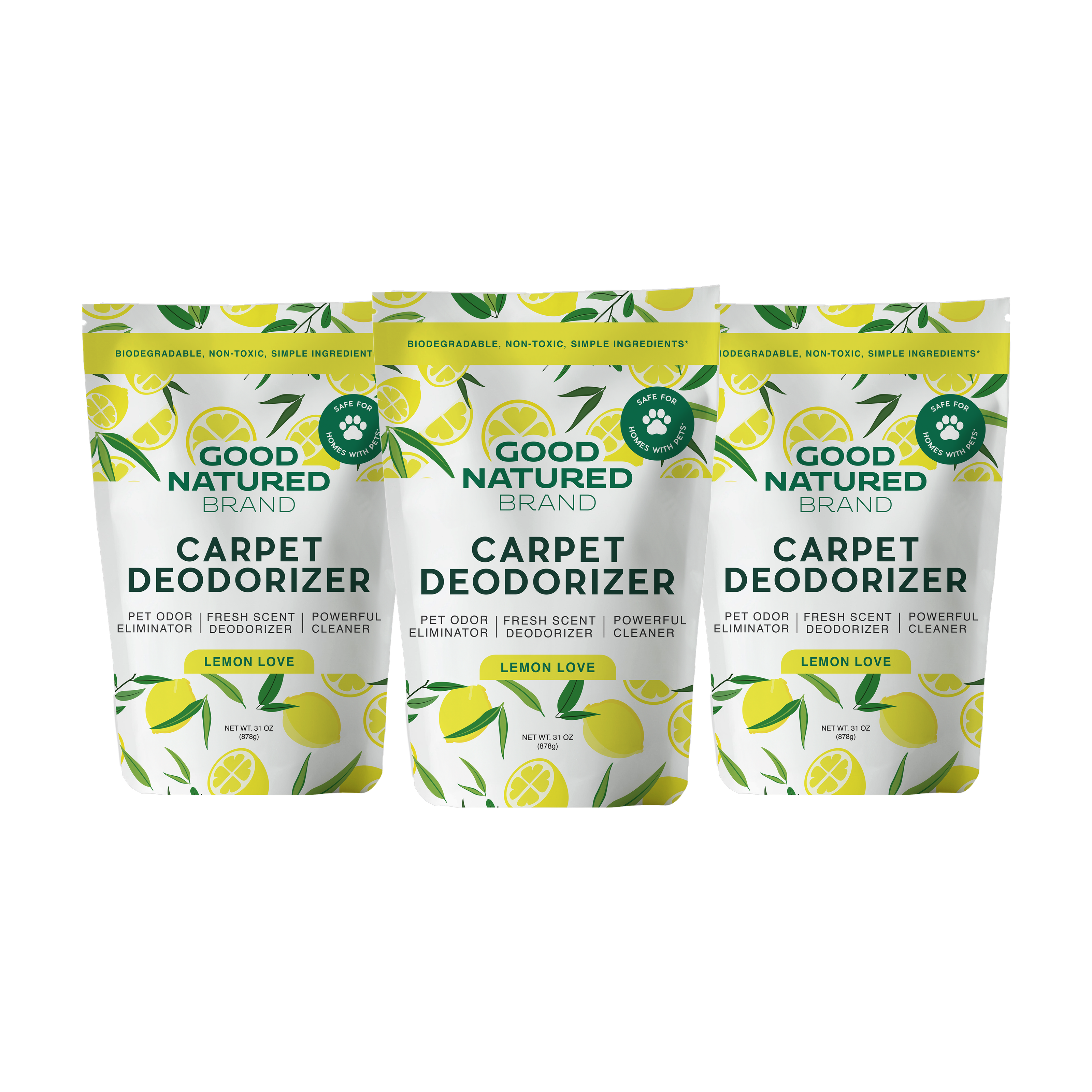
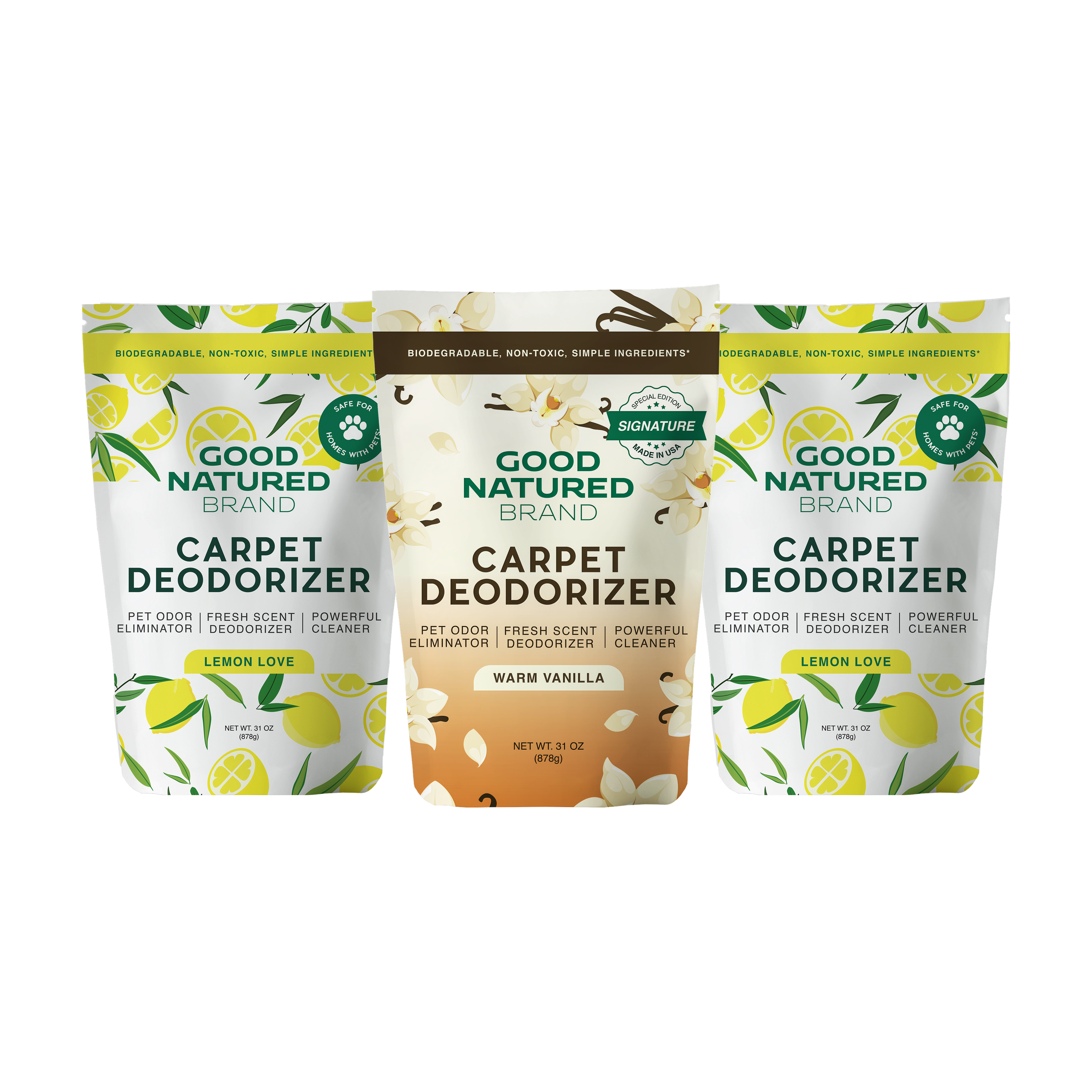
Shop the Product
Lemon freshness for every home.
Lavender calm for every home.
Orange energy for every home.
Mahogany warmth for every home.
Cherry blossom serenity for every home.
Cocoa butter comfort for every home.
Zesty freshness for every carpet.
Your Dog Is Counting, and Notices When You Short-Change Them
Dogs have a basic numerical awareness. Research into animal cognition has shown that dogs can track small quantities and notice when something does not add up, including the number of treats they receive. If you usually give your dog two treats and one day you only give one, they know. They may not bark about it, but the attentive stare, the expectant pause, the refusal to move on quite as quickly as usual: that is your dog doing the math.
This is not just clever animal behavior. It reflects a genuine capacity for pattern recognition and expectation. Dogs build detailed mental models of their routines and their rewards, and they notice discrepancies. Owners who have tried to sneak a smaller portion past their dog will usually confirm this from experience.
Your Dog Detects Hormonal Changes in Your Body
Dogs respond to chemical shifts in the human body tied to hormonal cycles, pregnancy, and stress in ways that go well beyond simple mood detection. There is substantial anecdotal evidence, backed by emerging research, suggesting that dogs often become noticeably clingier or more attentive before a pregnancy is confirmed, sometimes before the owner is even aware of it themselves.
The same applies to menstrual cycles and periods of sustained stress. The body's hormonal shifts produce detectable changes in scent, and dogs, with olfactory systems tens of thousands of times more sensitive than ours, pick up on those changes immediately. For many owners, their dog's behavioral shift was the first hint that something had changed in their body. That is a level of biological attunement that is difficult to fully wrap your head around.
Your Dog Knows When You Are Lying
Dogs cannot understand the content of a lie. They have no idea what you are saying. But they are exquisitely sensitive to the physiological changes that accompany deception: altered breathing patterns, a slight increase in heart rate, tension in the muscles, and subtle shifts in scent. These are the same involuntary signals that a polygraph machine attempts to measure, and dogs pick them up naturally, in real time, without any training.
They cannot tell you what you lied about. But they clearly notice that something in your body does not match the calm, normal baseline they are used to. For many dogs this shows up as a watchful alertness, a stillness, or a reluctance to fully relax in the way they normally would around their owner. The honesty you have with your dog is, in a sense, not optional.
Your Dog Has Memorized Every Corner of Your Home
Dogs maintain a precise three-dimensional mental map of their environment, accurate to within inches. Every piece of furniture, every object on a shelf, every familiar smell in every corner of your home is catalogued and retained. This map is so detailed that any change, a moved chair, a new piece of furniture, something left on a surface that is usually clear, is immediately noticed and usually investigated.
This is not idle curiosity. Environmental consistency matters deeply to dogs because it is tied to safety. A stable, familiar environment signals that nothing threatening has entered the space. When something changes, it warrants inspection. If you have ever watched your dog do a thorough sniff-check of a new piece of furniture or a bag you brought home, you are watching that mapping process in action. They are updating their model of the space and deciding whether the change is something to be concerned about.
A clean and consistent home environment genuinely matters to dogs. Products like All Purpose Cleaners that do not introduce harsh chemical scents help maintain the familiar sensory landscape your dog relies on to feel secure.
Your Dog Knows Exactly How Much Attention You Are Giving Them
Dogs can tell the difference between focused, present attention and distracted, going-through-the-motions petting. When you are scrolling on your phone while absentmindedly stroking your dog, they know. They track the quality of your attention, not just its presence. Research has shown that dogs keep a kind of running score of how much genuine engagement they are receiving, particularly when they are in a situation where they are competing for affection with another pet or family member.
This is not neediness. It is social intelligence. Dogs are highly attuned to the humans they live with, and they have learned over thousands of years of co-evolution that human attention is one of the most important resources available to them. Knowing whether that attention is real or distracted is a meaningful distinction to make.
Your Dog Can Tell Identical Twins Apart
Identical twins share virtually the same DNA, which means they smell more similar to each other than any other two people on earth. And yet dogs reliably distinguish between them. The reason is that despite genetic similarity, each person's unique combination of diet, skin bacteria, sweat composition, and daily habits produces a scent profile that is distinct enough for a dog's nose to differentiate.
Dogs treat identical twins as two separate individuals from the very beginning. This goes well beyond what humans can do visually, and it underscores just how much of the world dogs experience through smell rather than sight. For a dog, your scent is your identity, far more so than your face or your voice.
Your Dog Has Mapped the Social Hierarchy in Your Home
Dogs are deeply social animals and they are constantly observing the power dynamics in their family group. They notice who eats first, who gives the commands, who defers to whom, who comforts whom, and how different family members interact. From this observation they build a clear model of the household's social structure and they adjust their own behavior accordingly.
This means your dog behaves differently depending on who is in the room. They may be more relaxed and playful with one family member, more attentive and formal with another. They know who the authority figures are and they factor that into how they act. If you have ever noticed your dog watching an argument between two family members with an intensity that seemed almost analytical, that is exactly what was happening. They were updating their model.
Your Dog Syncs Their Sleep with Yours
Research has shown that dogs align their sleep stages with those of their human companions. When you enter deep sleep, your dog tends to follow. When you begin to stir, so do they. This synchronization runs deep enough that dogs appear to share something close to REM sleep with their owners, the stage during which dreaming occurs.
This is not simply convenience. It reflects how thoroughly dogs have integrated into human rhythms over thousands of years. Your dog's nervous system is, in a very literal sense, calibrated to yours. The closeness of this biological synchrony is one of the reasons dogs are so effective as emotional support animals and why the simple presence of a dog in the room has measurable effects on human stress levels and blood pressure.
The fact that your dog is sharing your sleep environment means the cleanliness of that space matters. Regularly washing dog bedding with a gentle Laundry Powder keeps the space fresh without disrupting the familiar scents your dog depends on.
Shop the Product
Lemon freshness for every home.
Lavender calm for every home.
Orange energy for every home.
Mahogany warmth for every home.
Cherry blossom serenity for every home.
Cocoa butter comfort for every home.
Zesty freshness for every carpet.
Your Dog Smells What Time It Is
Dogs use the gradual fading of scent concentrations throughout the day to build a sense of time. In the morning, scents in a room are at their strongest. As the day progresses, those scents fade at a predictable rate. Dogs have learned to read this fading as a clock, and it helps them anticipate events with remarkable accuracy, including when their owner is likely to come home.
This is why dogs are often waiting at the door before you arrive, even when your schedule changes slightly. They are not counting hours. They are reading the chemical state of the room and comparing it to what they know about when you usually appear. It is a completely different mechanism for tracking time than anything humans use, and it works extremely well.
Your Dog Remembers People Who Have Been Unkind to You
Dogs form protective social memories. If someone has been rude, aggressive, or upsetting to their owner, the dog registers that. The person's scent, body language, and the emotional context in which they appeared all get stored together as a memory. When that person appears again, the dog accesses that memory and responds accordingly, often with wariness, distance, or a low-level suspicion that the person may find puzzling if they have forgotten the original incident.
Your dog is, in a sense, keeping track of who is safe for you and who is not. They are not simply reacting to the person's current behavior. They are applying a longer memory that you may not even know they have.
Your Dog Reads Your Intentions Before You Act
By the time you consciously decide to take your dog for a walk, your dog almost certainly already knows it is coming. Dogs read the micro-signals that precede human actions with extraordinary precision: the particular way you reach toward the hook where the leash hangs, the direction of your first glance when you start to move, the shift in your posture as you begin to form an intention. These signals are subtle enough that most people are unaware they are making them at all.
This is why dogs are often already at the door, already excited, before you have made any definitive move toward the leash. They are not reading your mind. They are reading your body at a resolution that goes well beyond what most people realize they are projecting. Every behavioral sequence you repeat regularly gets studied, memorized, and anticipated.
Your Dog Detects Fear in You and Others
When a person experiences fear, the body produces a rapid chemical response: adrenaline, increased heart rate, muscle tension, changes in breathing and perspiration. Every single one of these changes is detectable to a dog. This is what lies behind the widely reported phenomenon of dogs growling at or avoiding people who seem perfectly calm to everyone else in the room. Those people may be presenting a neutral face, but their body is telling a different story, one that your dog can read clearly.
For your own dog, this fear detection functions as a protective mechanism. They are tuned to your emotional state partly because your fear may indicate a threat to both of you. A dog who knows you are frightened before you act on it is a dog who is already preparing to respond. It is one of the oldest and most practical aspects of the human-dog partnership, carried forward from tens of thousands of years of shared survival.
Your Dog Knows Exactly When You Stop Watching
Dogs understand the difference between being observed and not being observed, and they adjust their behavior accordingly. The dog who is not allowed on the furniture but quietly climbs onto the sofa the moment you leave the room is not being defiant in any abstract sense. They have simply learned that the rules around furniture are tied to your presence and attention, not to the furniture itself.
This creates what can only be described as a parallel version of household life, one that operates when you are watching and a slightly different one that operates when you are not. Dogs who know they are unsupervised often relax rules that they respect when you are present, exploring the kitchen, investigating the rubbish bin, rearranging cushions. If you have come home to evidence of this kind of activity, your Carpet Deodorizers and All Purpose Cleaners are probably already familiar with the situation.
Your Dog Has Bonded to You at a Biological Level
The final and perhaps most significant thing your dog knows about you is simply that you are home. The hormone oxytocin, central to bonding in humans, plays the same role in dogs. When your dog smells your scent, hears your voice, or feels your presence, their nervous system registers safety, familiarity, and belonging. This is not metaphorical. It is a measurable biological response tied to the same hormone that governs parent-child attachment in humans.
Research has confirmed that mutual eye contact between a dog and their owner triggers oxytocin release in both species simultaneously. This is a capacity that evolved specifically in dogs through their long history with humans. Wolves, even raised by humans, do not share this response in the same way. It is something dogs developed through thousands of years of living alongside us, and it means that the bond your dog feels toward you is not simply habit or conditioning. It is wired into their biology.
When your dog settles against you at the end of the day, they are not just resting. They are doing what their nervous system has been shaped over millennia to do: being close to the person who means safety, warmth, and home.
What All of This Means for Life with Your Dog
The picture that emerges from all of this research is of an animal that is paying far more attention to you than you are probably paying to them. Your dog is tracking your hormone levels, your emotional state, your social dynamics, your daily patterns, your intentions, and your attention, all simultaneously and without any effort. They have been doing it their whole lives. They will keep doing it for as long as they are with you.
That kind of attentiveness deserves a response. Not just in terms of how we treat our dogs day to day, but in how we think about the spaces we share with them. At Good Natured Brand, our plant-based products are made with the whole household in mind, including the members who are watching your every move. Our Laundry Powders keep shared bedding and blankets clean without harsh residues that could irritate sensitive noses. Our Carpet Deodorizers freshen the spaces dogs spend the most time in, without synthetic chemicals that overwhelm their extraordinary sense of smell. And our All Purpose Cleaners handle the mess of shared life gently and effectively.
Because a home shared with a dog is not just a home. It is a place two species have chosen to understand each other in. That is worth taking care of.
Want to read more about life with dogs and sustainable home living? Visit the Good Natured Brand blog for more.