You vacuum the carpets, light a candle, and spray something from a bottle. An hour later the smell is back. If that sounds familiar, the problem is not how hard you are cleaning. The problem is where you are cleaning. Most home freshening products are designed to treat one surface, cover one smell, and fade within the hour. Getting your home to genuinely smell fresh requires something different: a routine that freshens the whole room, not just the carpet, by targeting every source of odour at the same time.
That means the carpet, yes, but also the surfaces, the air, the upholstery, and the laundry. When you address all of those together using natural, plant-based products, you stop reacting to smells and start preventing them. At Good Natured Brand, that is exactly what our home care range is built around. This guide walks you through the whole approach, step by step.
Why Your Home Still Smells After You Clean
Before you can fix a persistent odour problem, it helps to understand what is actually causing it. Household smells rarely come from one place. They build up across multiple surfaces over time, which is why treating a single spot almost never gives you a result that lasts.
Where Odours Actually Come From
The particles responsible for most household smells are drawn to porous materials. Carpet fibres, fabric upholstery, curtains, unsealed walls, and soft furnishings all absorb odour-carrying compounds from the air and hold onto them. Over time, those particles accumulate in layers and become the background smell of your home.
The most common sources include:
-
Pet dander, saliva, and urine that sink into carpet padding and fabric fibres
-
Mould and mildew developing in poorly ventilated rooms, behind furniture, and under sinks
-
Cooking fumes and grease that cling to walls, curtains, and kitchen cabinetry
-
Body oils and sweat absorbed into bedding, sofas, and clothing worn throughout the day
-
Damp laundry left sitting in machines or hampers, generating a musty smell that spreads through the house
Why Spray Fresheners and Candles Do Not Work Long Term
Spray air fresheners add fragrance molecules to the air. They do not remove the odour molecules already there. Both exist in the same space simultaneously, which is why the smell returns the moment the fragrance fades. Scented candles work the same way: heat disperses fragrance, but the underlying odour source is untouched.
Vacuuming lifts surface debris from carpet but does not extract the odour compounds embedded deep inside the fibres and padding beneath. You can vacuum every day and still have a carpet that smells.
Real freshness requires going further. For more on building a non-toxic cleaning routine at home, the Good Natured Brand blog is a good place to start.
Start with the Carpet
If there is one area of your home that has the biggest impact on overall room scent, it is the floor. Carpet acts like a filter for your entire living space. It traps dust, pet hair, bacteria, moisture, and every airborne odour particle that passes through the room. Every time someone walks across it, those particles get disturbed and released back into the air. Your carpet is not just holding smells. It is actively spreading them.
Why Carpet Odours Are Harder to Remove Than They Look
Carpet fibres are microscopic and porous. Pet urine, for example, does not stay on the surface. It soaks through the fibres, into the underlay, and sometimes into the subfloor below. A surface spray will never reach it. That is why the smell keeps returning even after you treat the visible stain.
The same is true of cooking smells, tobacco, and general household dust. These particles settle into the carpet in layers and combine into the ambient smell people notice the moment they walk into your home.
How to Use Carpet Deodorizer Powder Properly
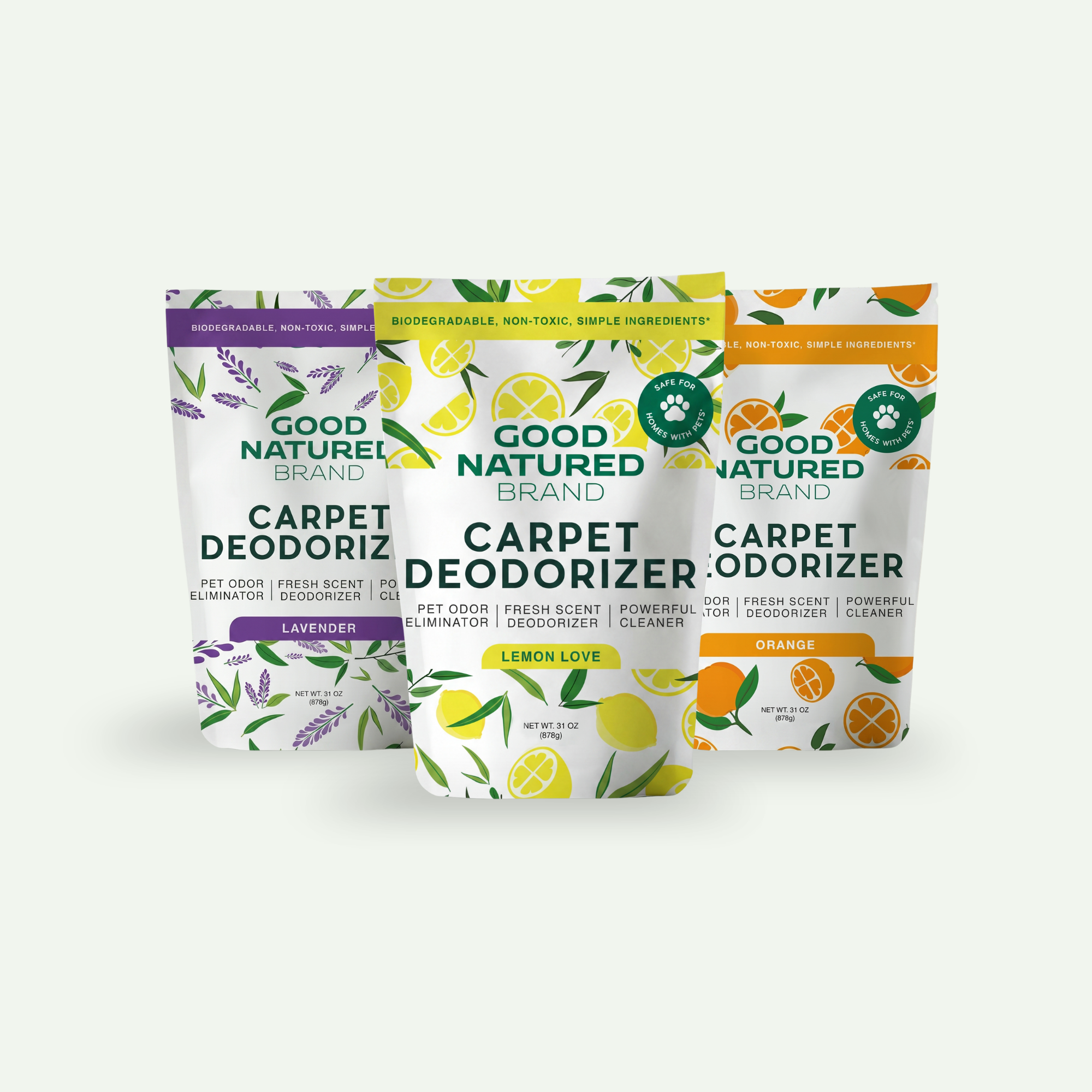
A quality powder-based carpet deodorizer works differently from a spray. The powder physically absorbs odour compounds from within the fibres, neutralising them before you extract them with a vacuum. To get the most from it:
-
Sprinkle over the entire carpet surface, not just the areas that smell strongly. Odour particles distribute across the whole floor, not just the visible patches.
-
Let it sit for at least 15 to 30 minutes. For deep pet odours or long-standing smells, leave it overnight.
-
Vacuum slowly in multiple directions to extract the powder together with the odour compounds it has absorbed.
-
Repeat weekly as a preventive habit rather than waiting until a smell builds up.
Why Natural Powders Outperform Chemical Sprays
The best natural carpet deodorizers are built on a baking soda base, and there is a good reason for that. Baking soda is an amphoteric compound, meaning it can neutralise both acidic and alkaline odour molecules. It does not compete with smells by adding a stronger fragrance on top. It chemically reacts with and removes the odour compounds themselves.
When the powder is infused with essential oils, vacuuming disperses those oils into the room air as you clean. The result is that you freshen the whole room, not just the carpet surface. You get a cleaner floor and cleaner air at the same time, with no toxic residues left behind.
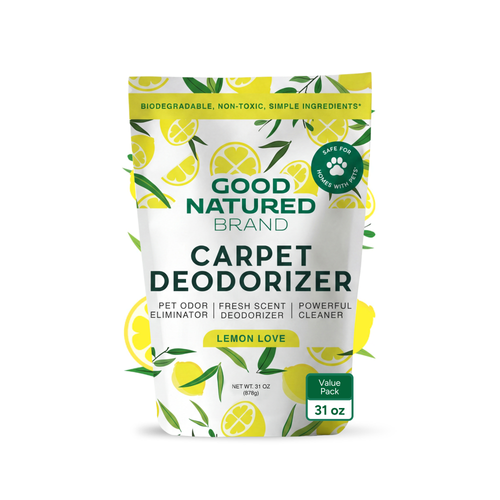
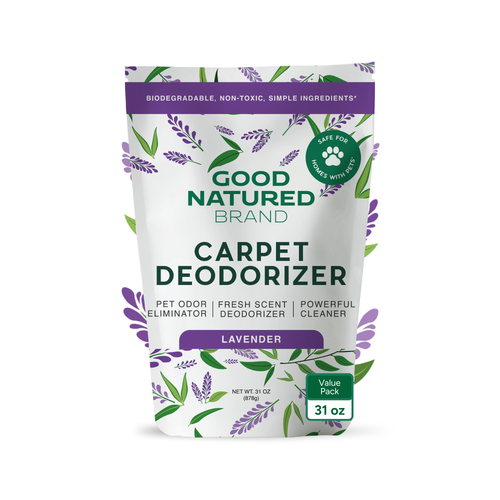
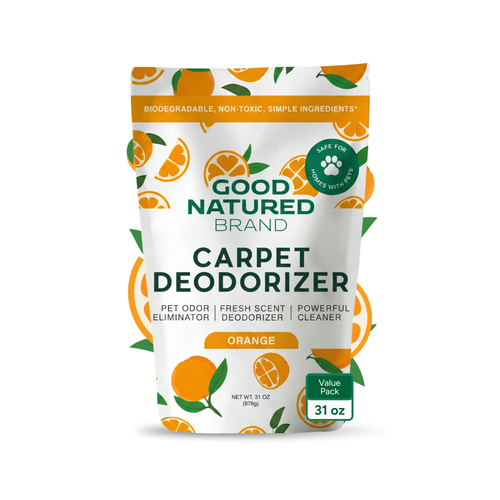
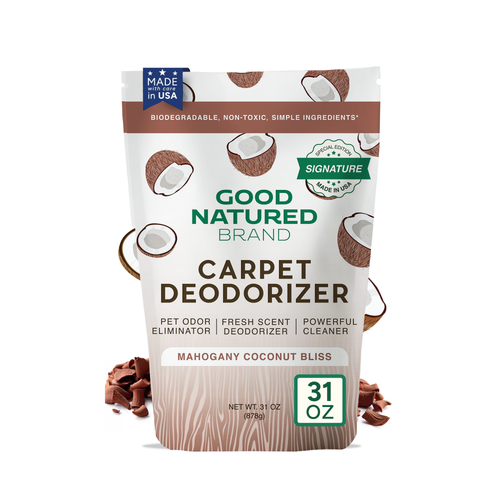
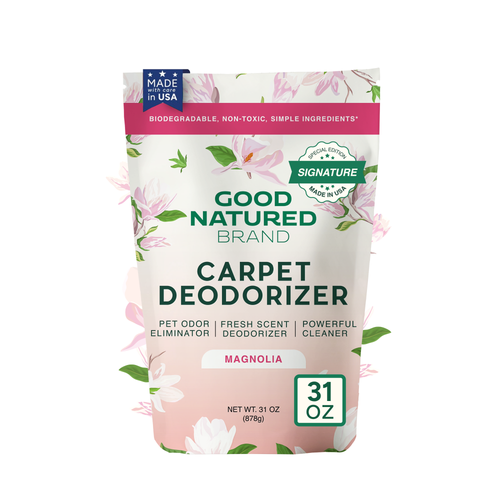
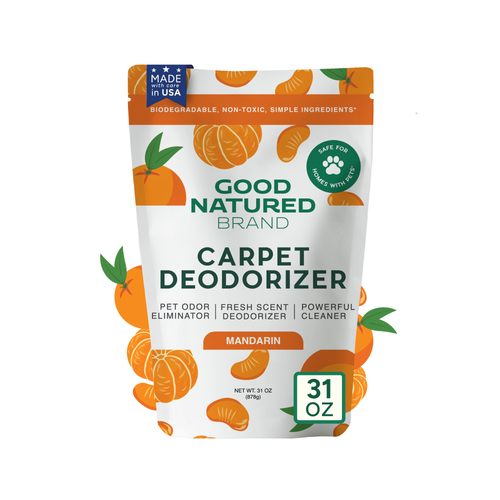
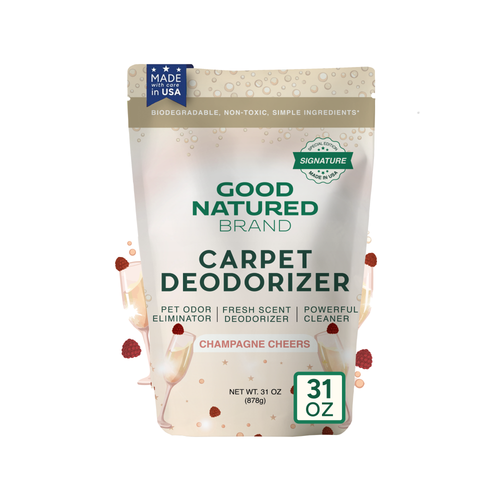
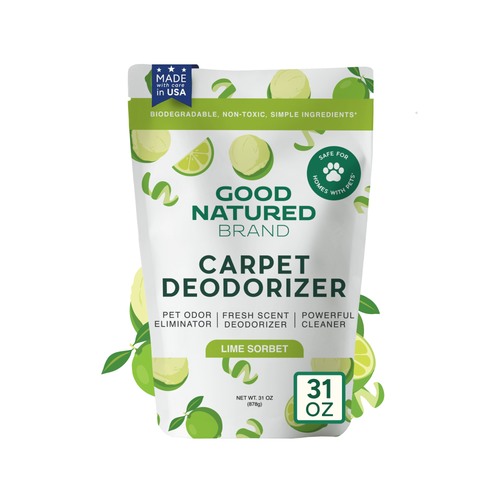
Shop the Product
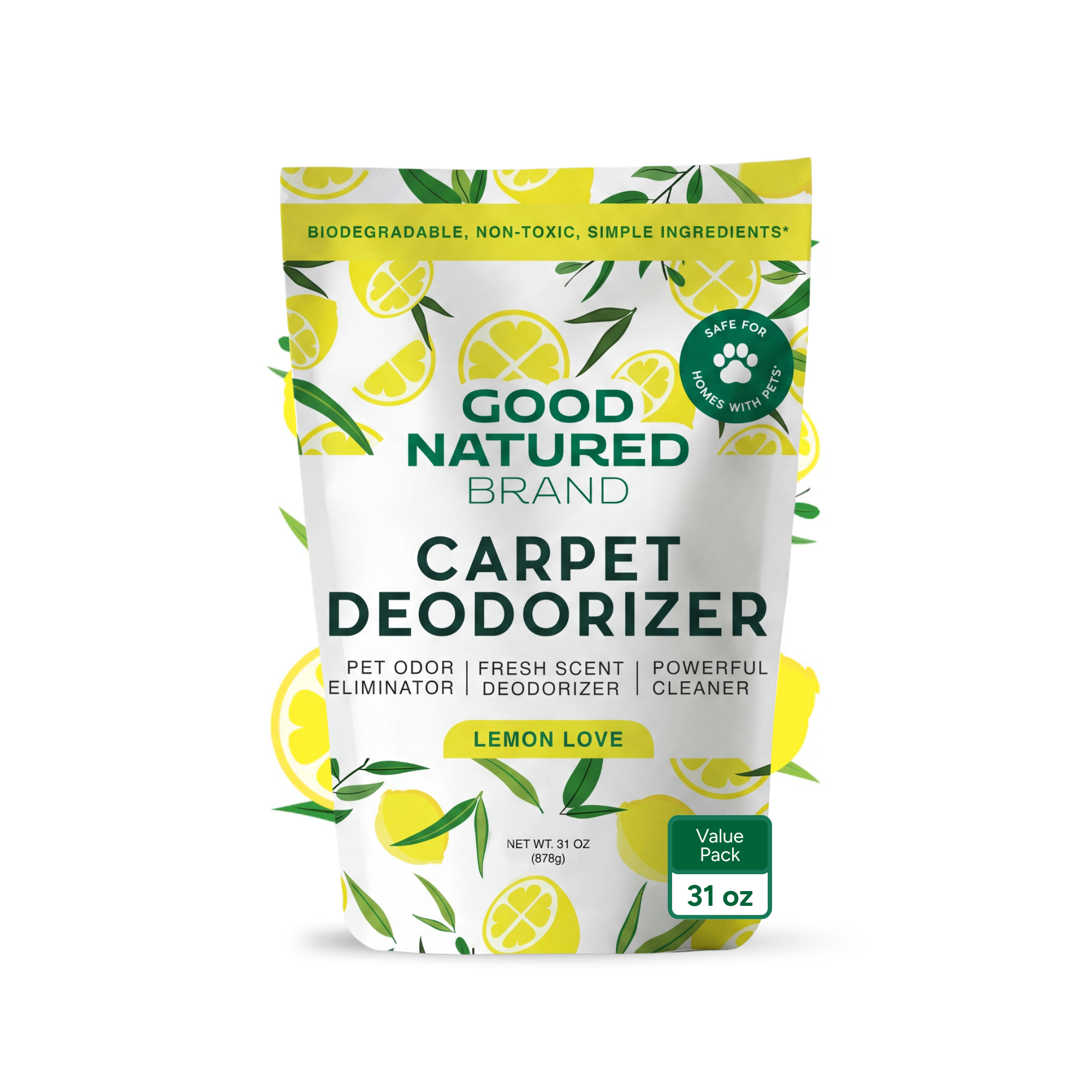
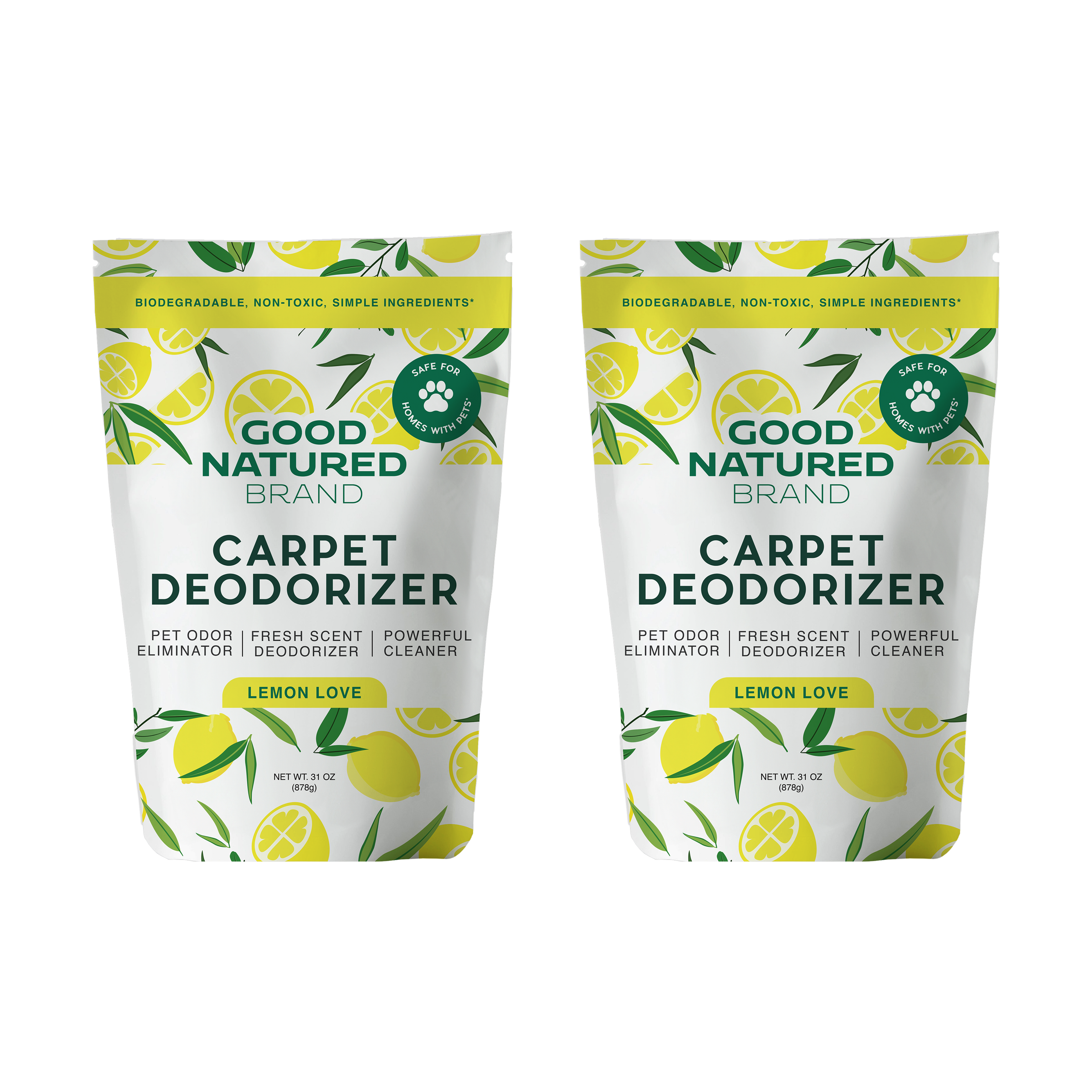
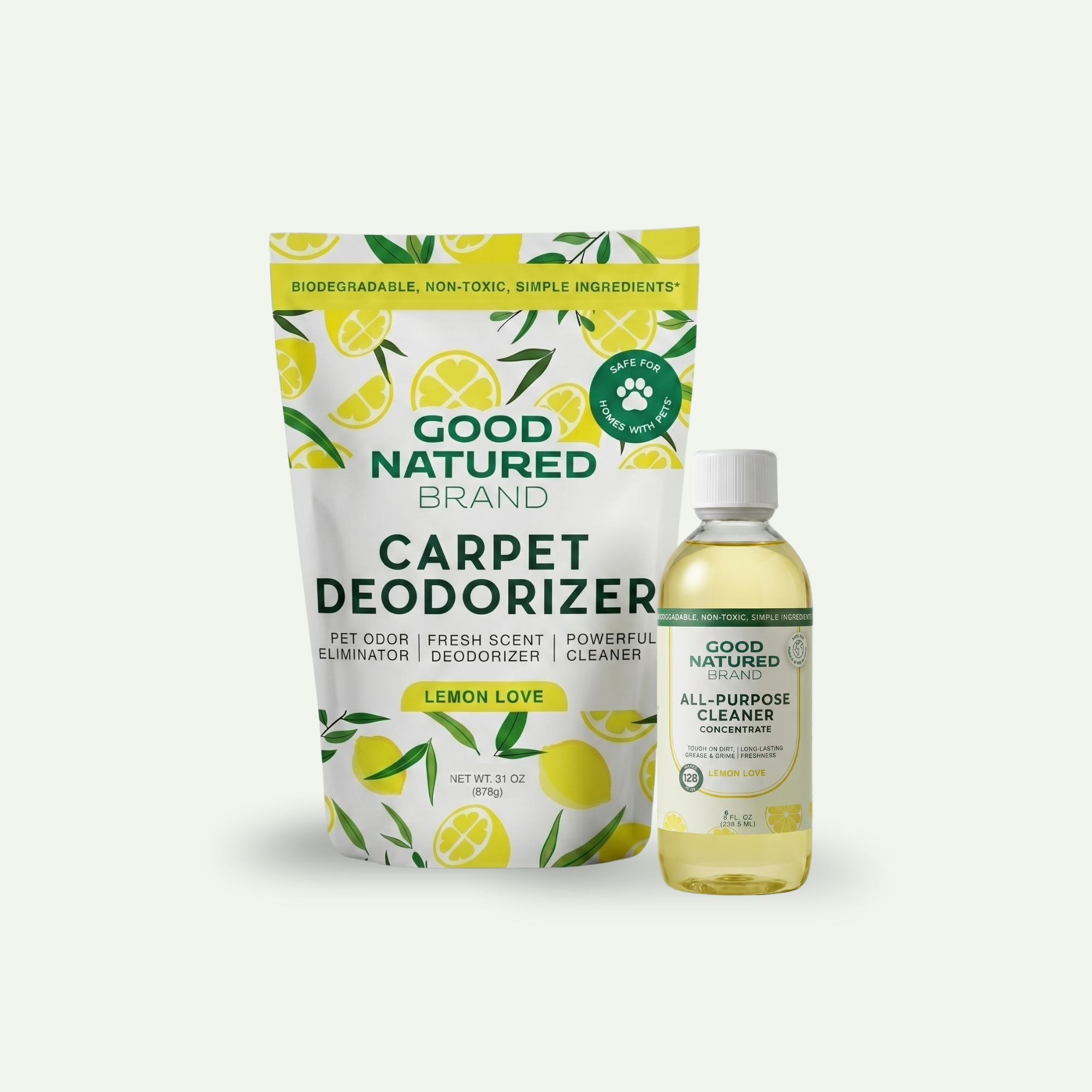
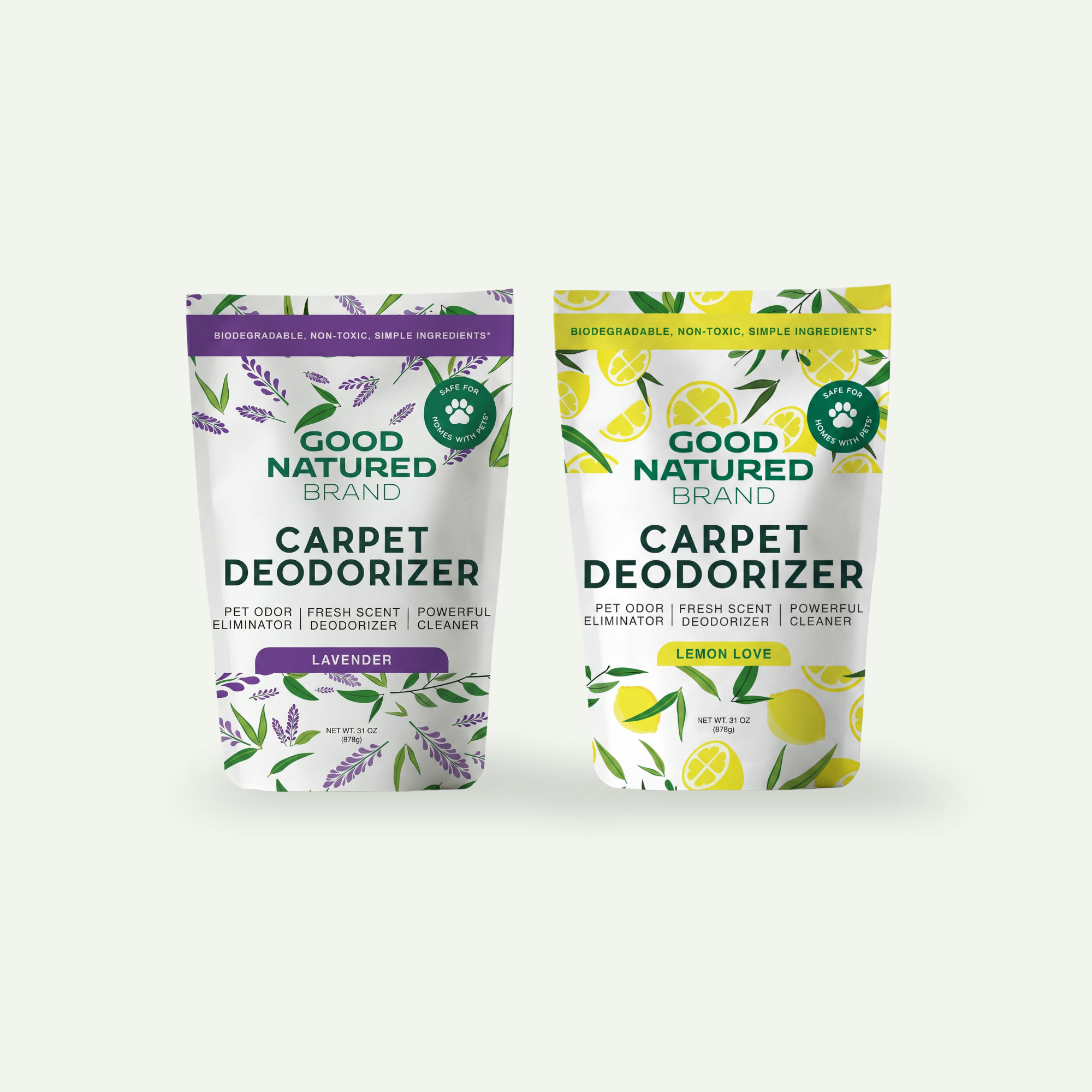
Lemon freshness for every home.
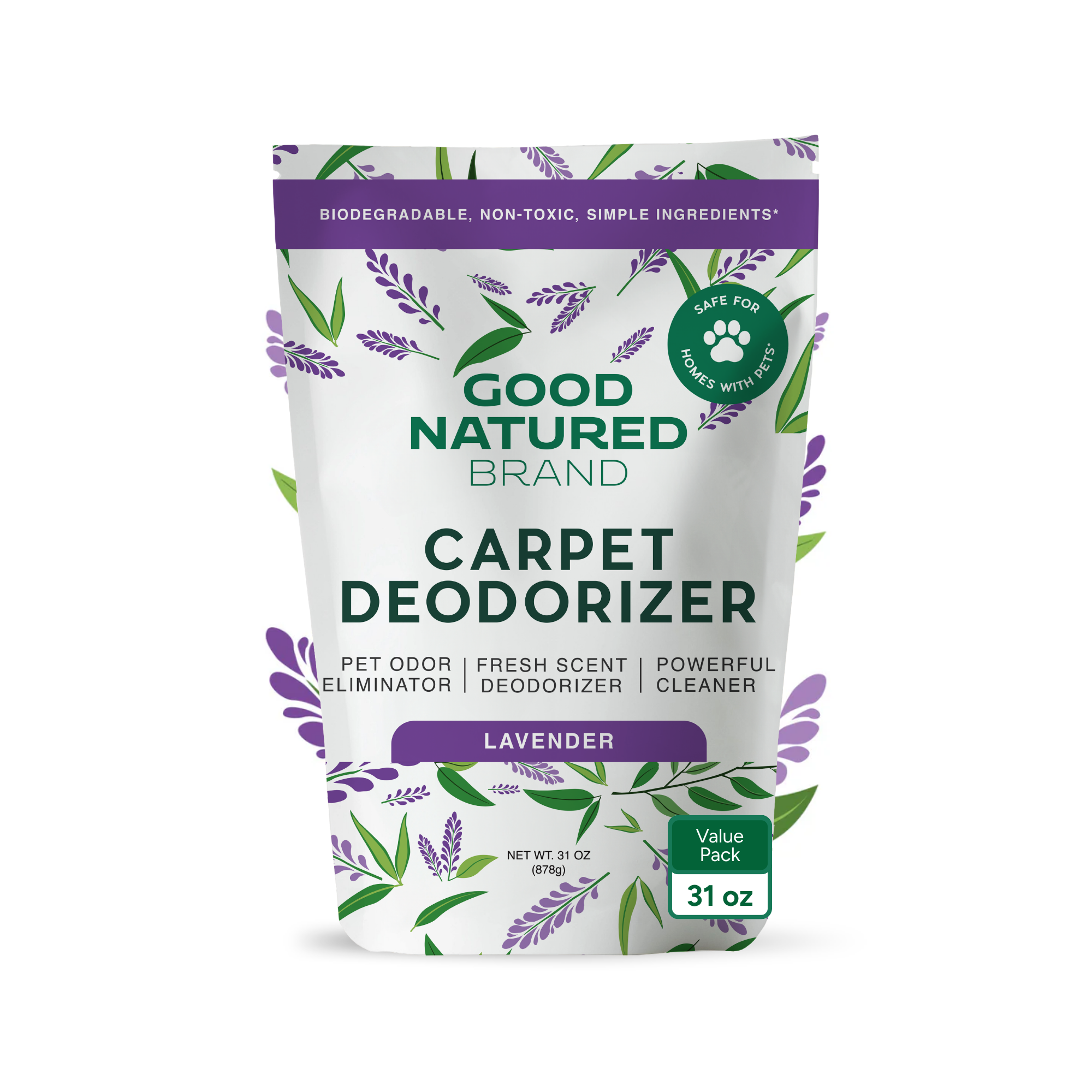
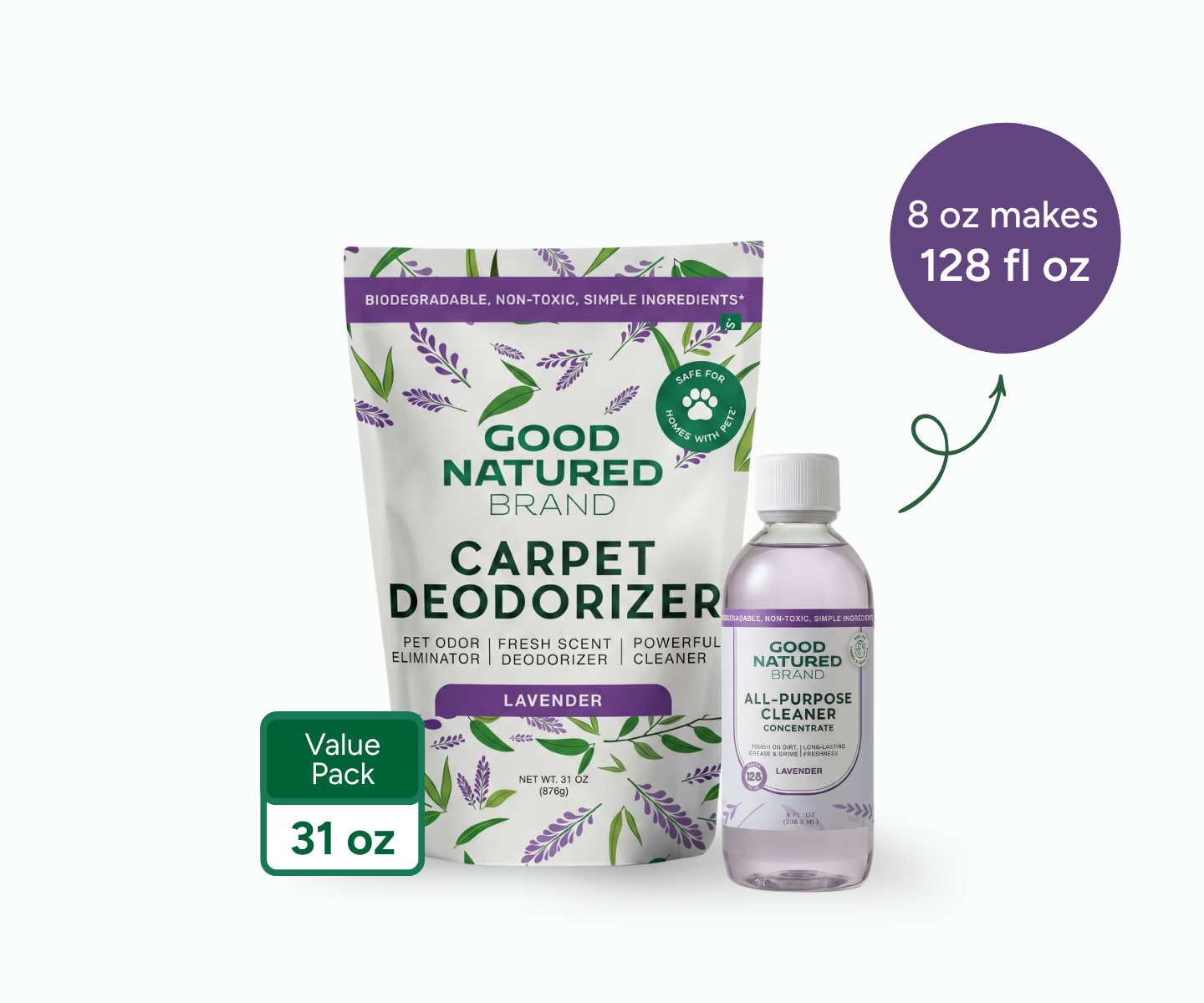
Lavender calm for every home.
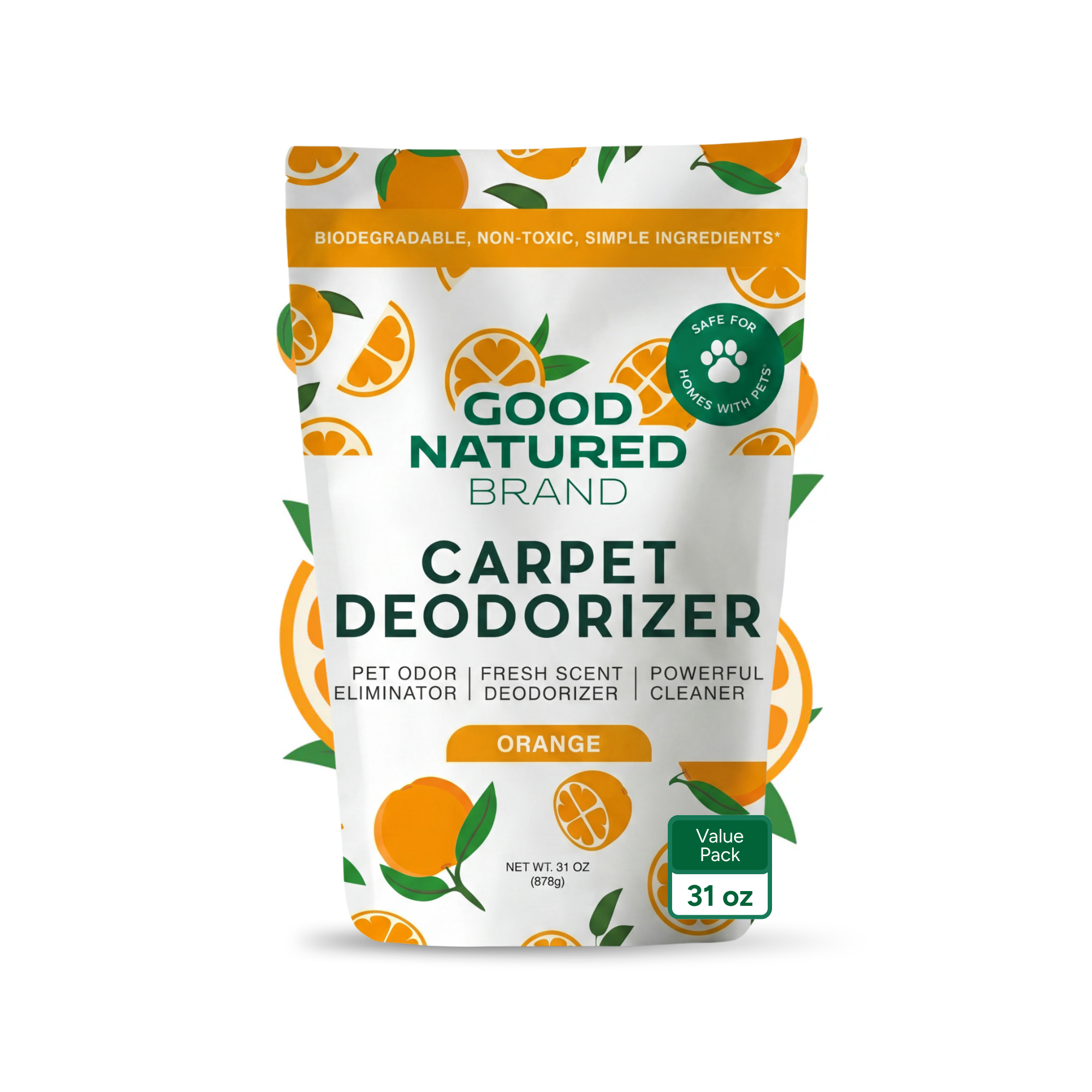
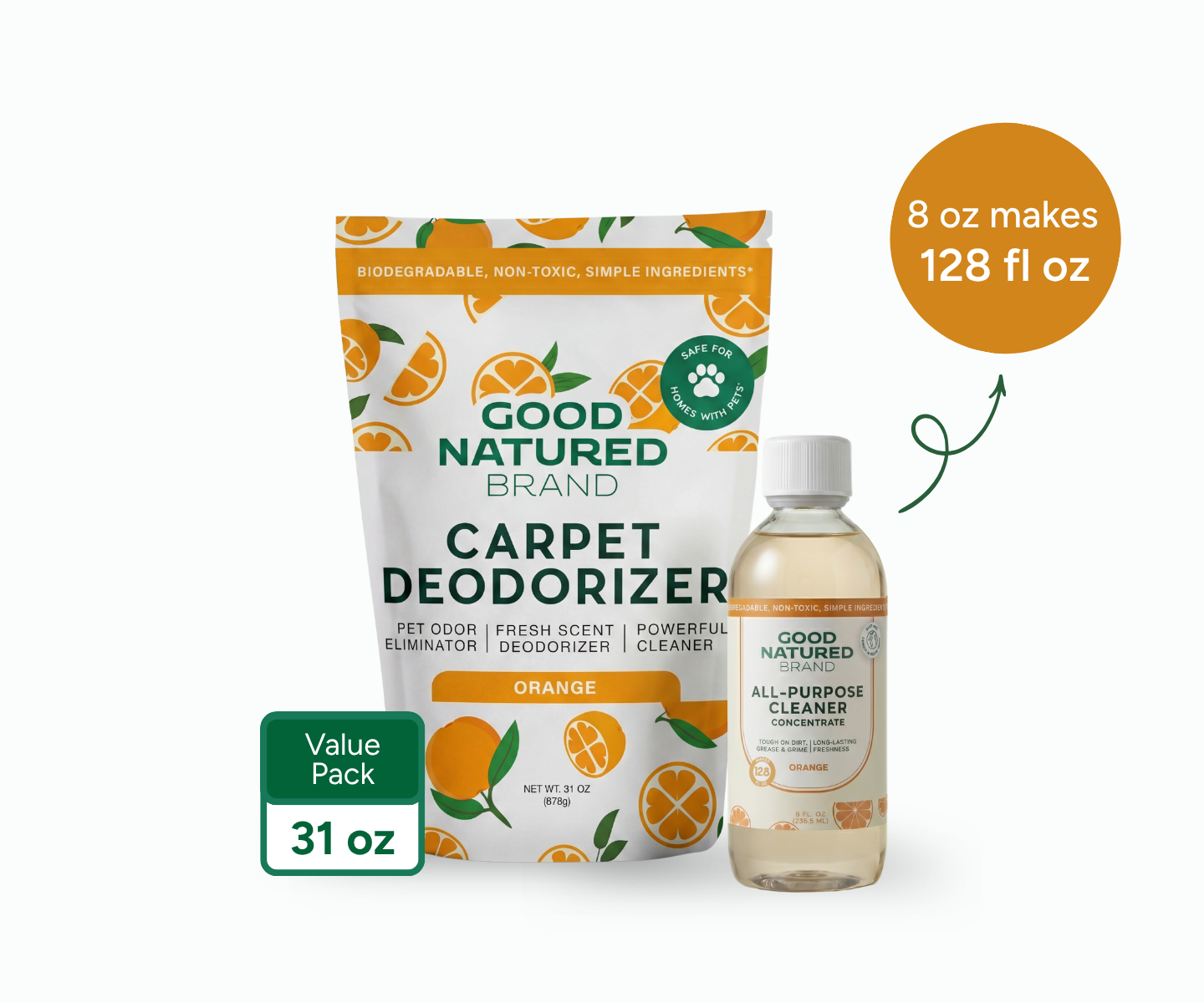
Orange energy for every home.
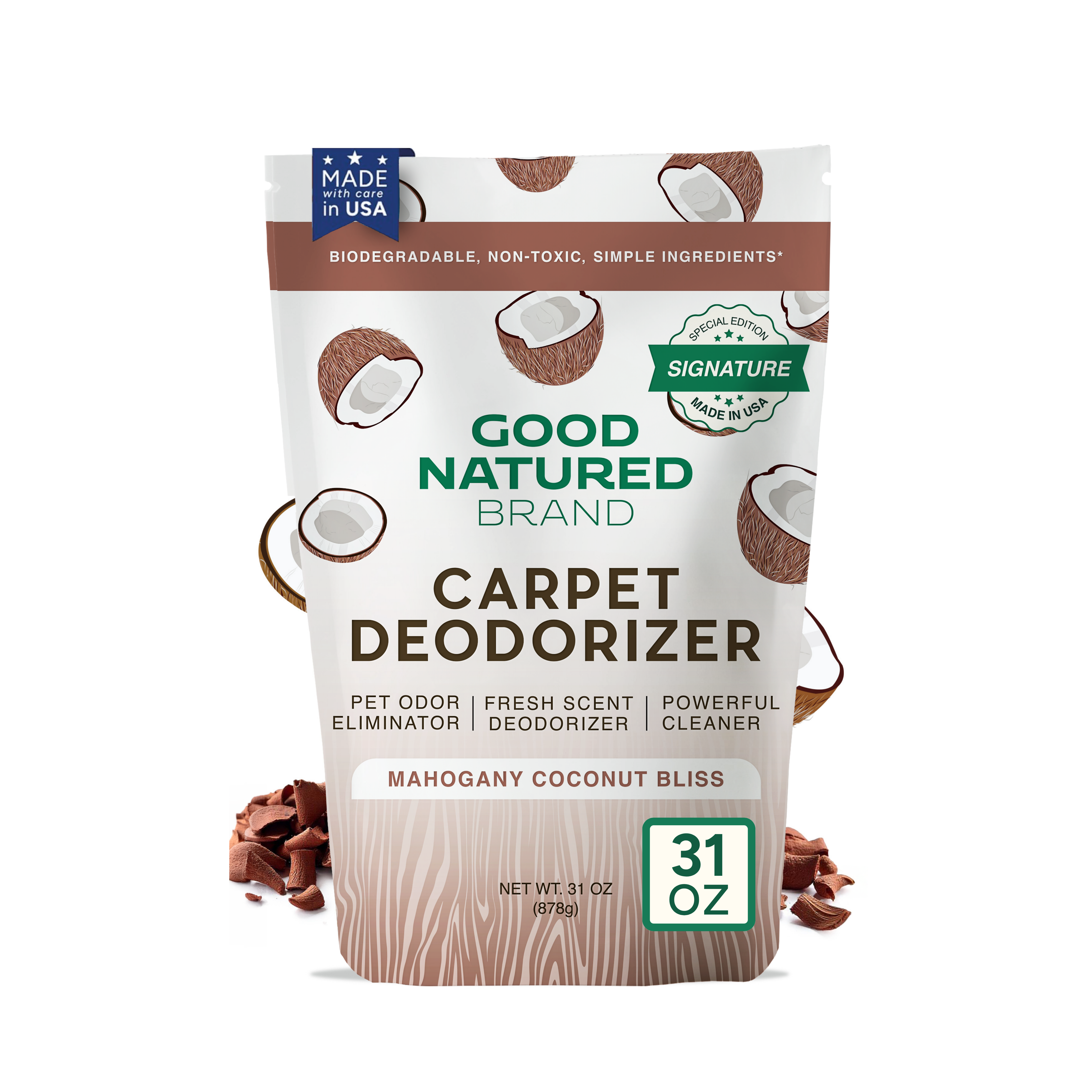
Mahogany warmth for every home.
Mandarin freshness for every home.
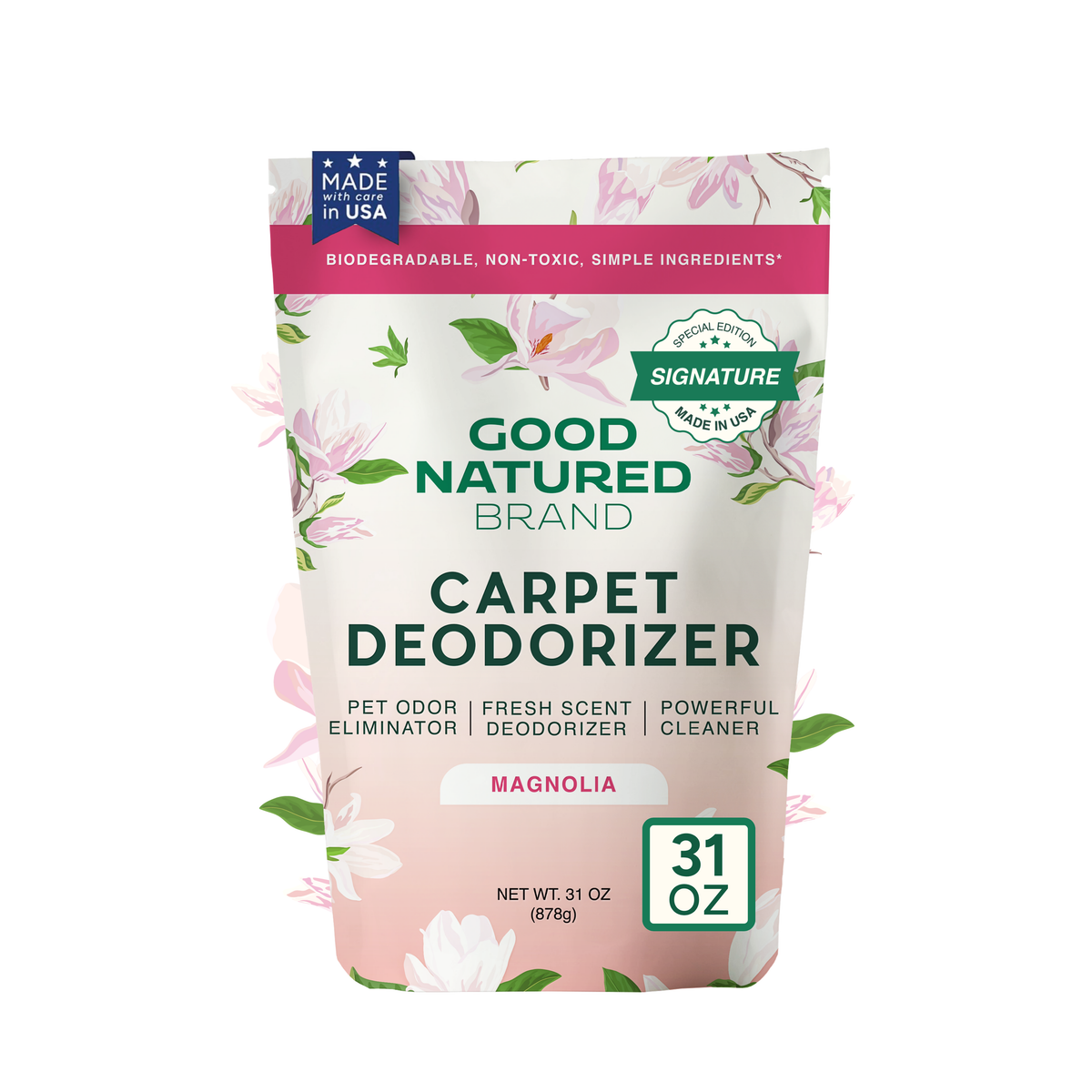
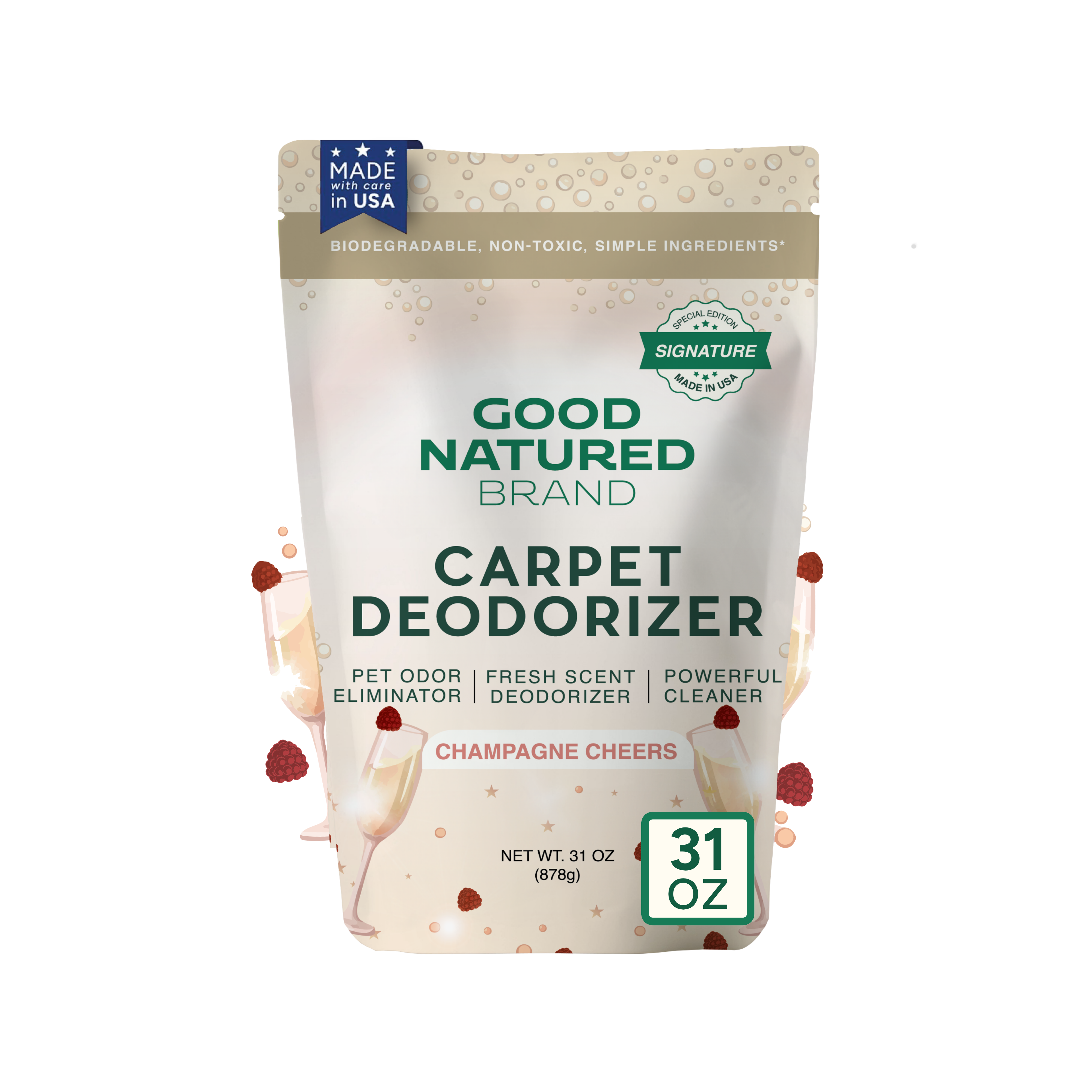
Champagne sparkle for every home.
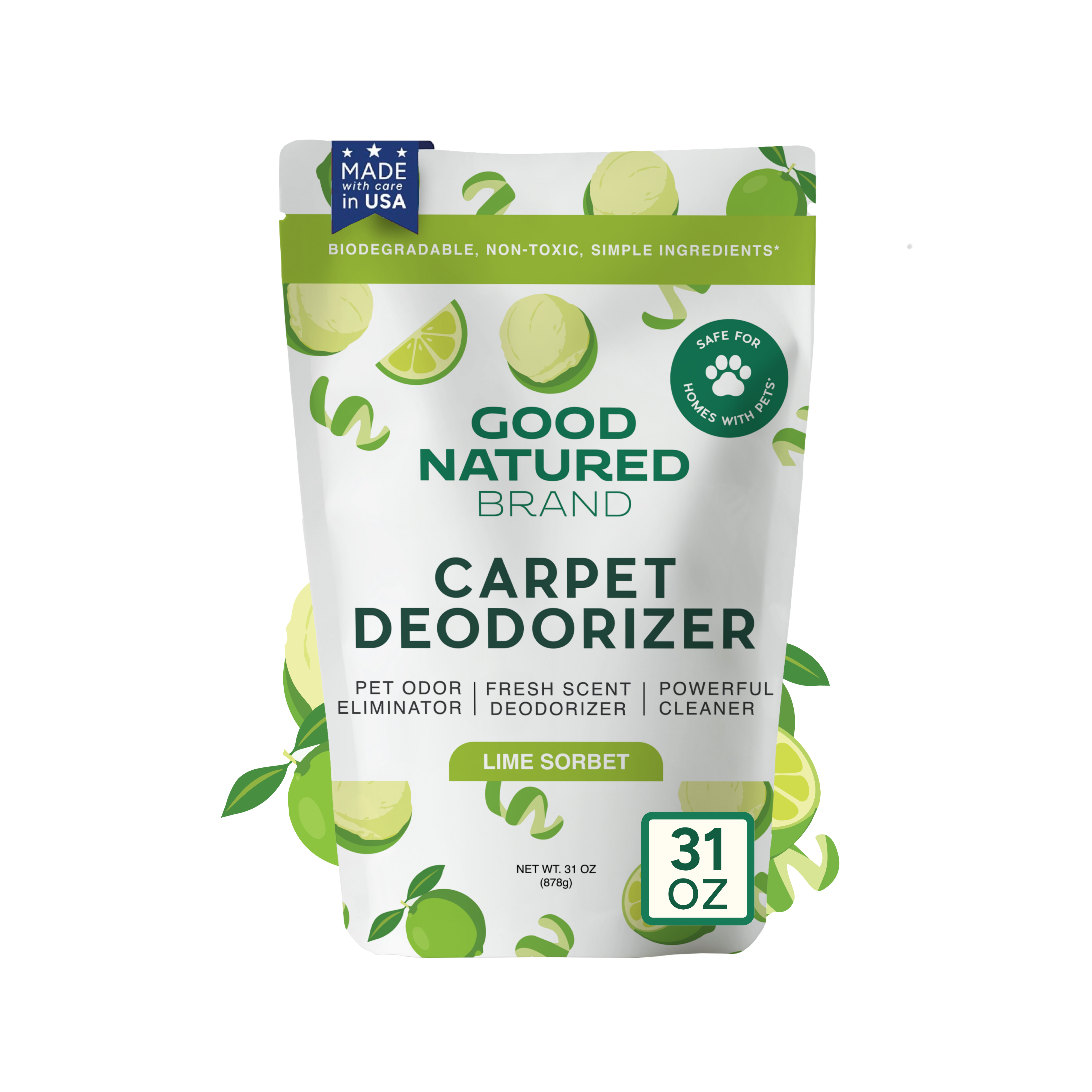
Zesty freshness for every carpet.
Clean Every Surface, Not Just the Floor
Once the carpet is treated, the next step is addressing the surfaces around the room. This is the part most people skip, and it is why the smell returns so quickly. Hard surfaces, upholstery, walls, and furniture all carry odour particles, and if they are not cleaned regularly, they simply re-infuse the air after everything else has been freshened.
Surfaces That Hold Odours You Are Probably Missing
Beyond the obvious areas, these are the surfaces that most often go untreated:
-
Kitchen cabinet fronts and the sides of appliances, where invisible grease builds up over time
-
Bathroom grout lines and silicone seals, which are ideal environments for mould growth
-
Living room cushions and throw pillows, which absorb body oils with every use
-
Skirting boards, door frames, and hallway walls, where airborne dust and odour particles settle gradually
-
The space behind large appliances where debris and moisture accumulate without being noticed
How to Clean Surfaces So They Actually Smell Fresh
There is a difference between a surface that looks clean and one that genuinely smells fresh. Many conventional cleaners use heavy synthetic fragrance to give the impression of cleanliness. In practice, those synthetic scents can combine with existing odours to create something more unpleasant than either on its own.
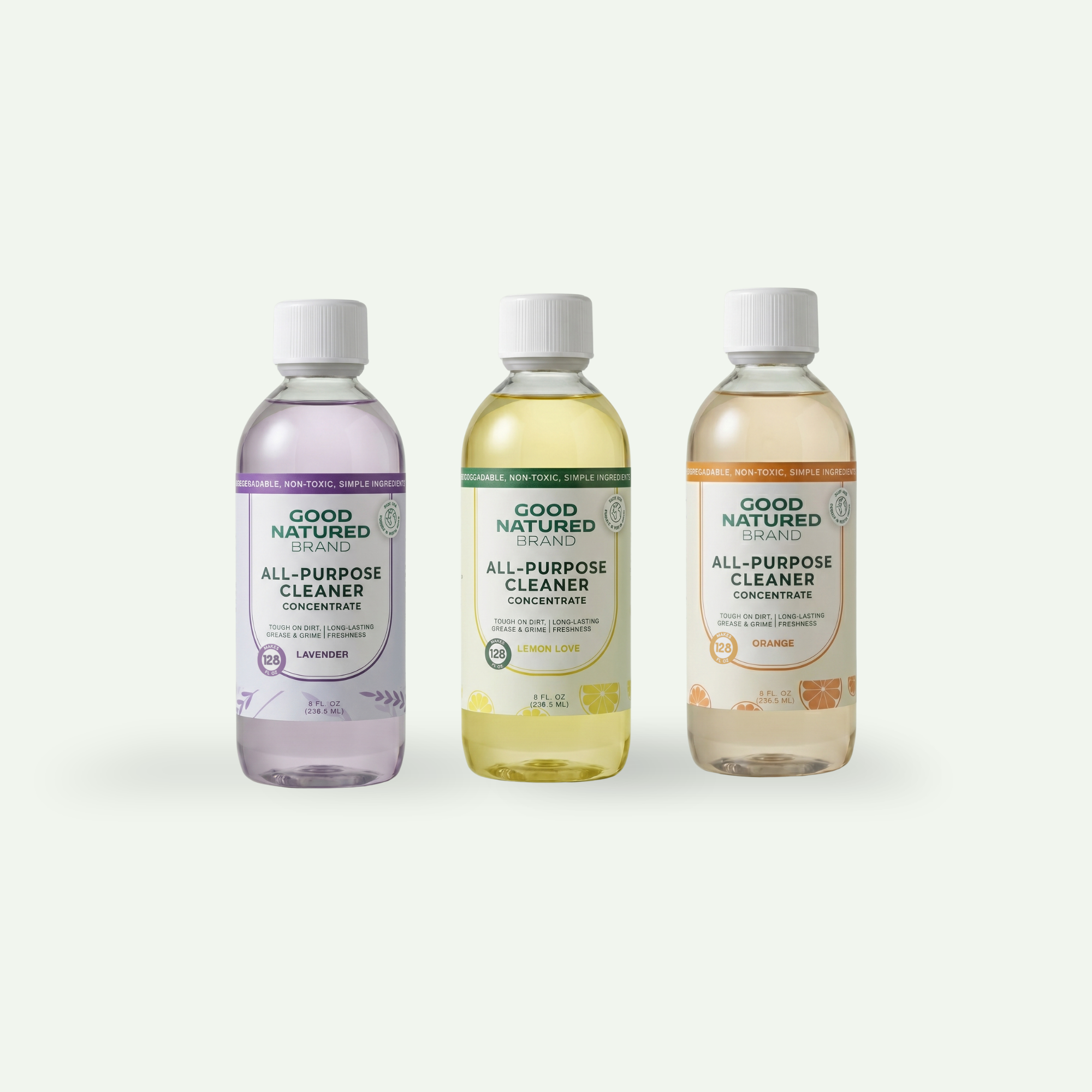
A plant-based all-purpose cleaner with natural essential oils avoids that problem. The fragrance is clean, light, and honest. It complements a surface that is genuinely clean rather than masking one that is not. In practical terms:
-
Wipe down high-touch surfaces daily: light switches, door handles, worktops, and tap surrounds
-
Use your all-purpose cleaner on upholstery as well, diluted appropriately and always spot-tested on fabric first
-
Clean skirting boards weekly, since they collect the dust and odour particles that sit at floor level
-
Open windows for ten minutes after cleaning to allow air exchange and carry any remaining airborne particles out of the room
A good all-purpose cleaner does two things at once: it removes the source of the smell and, as it dries, lightly freshens the air in the room. That dual action is what makes it a genuine part of a whole-room freshening routine rather than just a surface polish.
Do Not Overlook Your Laundry
This is the connection most home freshening guides miss entirely. Your laundry routine has a direct impact on how your whole home smells. Fabric is one of the most effective odour-carrying materials there is, and you have fabric in every room: on your sofa, on your bed, hanging at your windows, and worn by every person walking through the house.
How Laundry Odours Travel Through Your Home
A damp towel left on a bathroom floor releases musty odour into the air for hours. Sheets and pillowcases absorb body oils every night, and a bed that smells stale makes the whole bedroom feel off. Gym clothes and school uniforms carry their odours from room to room, and if they sit in a basket for a day, those smells start to spread into the surrounding area.
The washing machine itself is often the culprit no one suspects. Moisture trapped in the drum and the rubber door seal creates conditions where mould and bacteria thrive. Those then transfer onto every load you wash. You may be putting in clean-smelling clothes and getting back something that already smells faintly off.
What to Look for in a Laundry Powder for Lasting Freshness
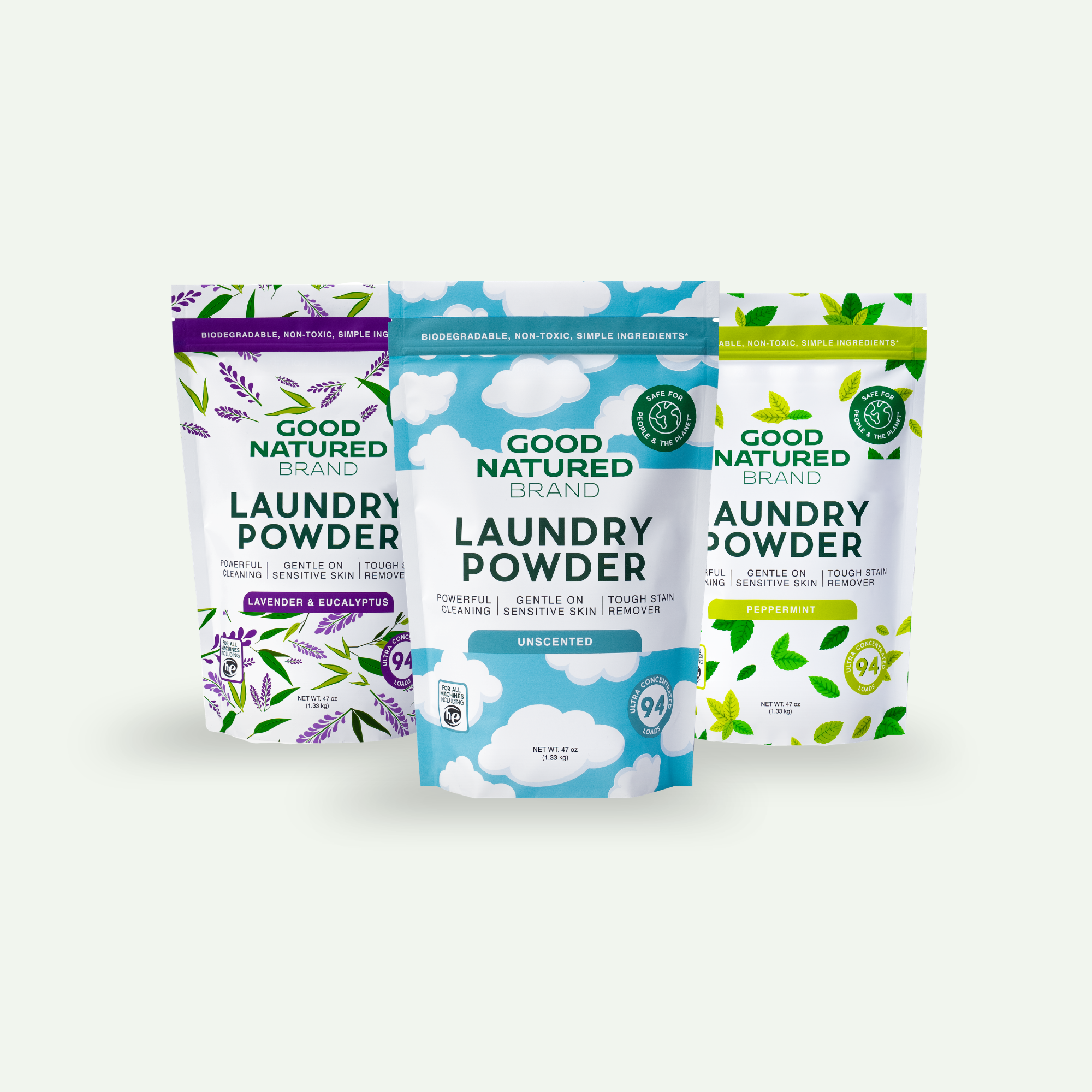
A well-formulated laundry powder tackles odour at the molecular level rather than covering it with heavy fragrance that fades after an hour of wear. The key features to look for:
-
Plant-derived surfactants that penetrate deep into fabric fibres and lift odour compounds out from within the weave, not just from the surface
-
Enzyme-based formulas that break down the biological compounds responsible for smell: proteins from sweat, lipids from body oils, and odour-causing bacteria
-
Natural fragrance from essential oils that transfers lightly to fabric and releases slowly over time, so your laundry stays fresh for days rather than hours
-
No synthetic fragrance enhancers or optical brighteners, which fade quickly and can cause skin sensitivity, particularly in children
As part of your monthly routine, run an empty hot cycle in your washing machine with a scoop of laundry powder to clean the drum and remove any mould or bacteria that has built up inside the machine.
Build a Whole-Home Freshening Routine That Sticks
The difference between a home that always smells fresh and one that only smells fresh right after cleaning is a routine. The goal is to shift from reacting to smells when they appear to preventing them before they build up. Here is what that looks like in practice.
Daily Habits
-
Open windows for at least ten minutes every morning. Moving air disperses odours that stale air holds. It is the most effective freshening tool you have, and it costs nothing.
-
Wipe high-touch surfaces with your all-purpose cleaner after meals and any high-activity periods
-
Move laundry promptly from the washing machine to the dryer. Even an hour of sitting damp is enough for mildew odour to start developing.
-
Place open boxes of baking soda in enclosed spaces such as cupboards, under the sink, and in the refrigerator to absorb odours passively around the clock
Weekly Tasks
-
Apply carpet deodorizer powder to all rugs and carpets throughout the home, allow it to sit for 30 minutes, then vacuum thoroughly
-
Wash fabric cushion covers, pet bedding, and soft furnishings on a rotating basis so they stay genuinely fresh between deep cleans
-
Diffuse eucalyptus, lemon, or lavender essential oils in your main living areas for 30 minutes to introduce clean, natural fragrance to the air
-
Check your HVAC filter. A dirty filter recirculates dust and odour particles through every room in the home and undoes all your other freshening efforts.
Monthly Reset
-
Deep-clean upholstery with a fabric-safe, plant-based cleaner. Sofas and armchairs absorb months of ambient odour and need periodic treatment beyond regular vacuuming.
-
Clean behind large appliances where debris and moisture accumulate and create hidden odour sources
-
Deodorize drains, garbage disposals, and bins, which are some of the most powerful odour generators in a home and are easily missed in a standard clean
-
Refresh wardrobes and storage areas with cedar sachets or essential oil-soaked cotton balls
The Natural Ingredients That Actually Fight Odour
Understanding what makes a natural product genuinely effective helps you choose what to buy and use it properly.
Baking Soda
Baking soda is an amphoteric compound that neutralises both acidic and alkaline odour molecules through a direct chemical reaction. It does not add a competing fragrance. It removes the odour source. That is why it forms the base of Good Natured Brand's carpet deodorizer formulas and why it works so reliably across so many different types of household smells.
Plant-Based Enzymes
Enzymes are biological catalysts that break complex odour-causing compounds into simple, odourless molecules. Proteases target protein-based smells from sweat and pet urine. Lipases break down grease and food odours. Amylases address starch residues that attract bacteria. When included in laundry powders and all-purpose cleaners, they do not just clean the surface. They permanently eliminate the biological source of the smell so it does not return once the fragrance fades.
Essential Oils
Essential oils offer functional benefits that synthetic fragrance cannot. Tea tree oil has documented antimicrobial properties that help stop odour-causing bacteria from returning to treated surfaces. Eucalyptus works well in bathrooms and laundry applications. Lavender provides a long-lasting scent that suits bedrooms and linen storage. Citrus oils cut through cooking smells and bring brightness to kitchens and living rooms. Used in cleaning products, they are doing more than smelling good.
Freshening Mistakes That Make Things Worse
Even with the right products, a few common habits can work against a fresh-smelling home:
-
Spraying freshener over an unclean surface. This does not neutralise the odour. It creates a combination of the original smell and the added fragrance, which is often more unpleasant than either alone.
-
Using too many competing scents at once. Multiple synthetic fragrances from candles, fabric conditioner, air fresheners, and cleaning products can clash and produce a heavy, artificial environment that is harder to live in than a home with no fragrance at all.
-
Ignoring the washing machine. A machine that smells musty transfers that smell to every load. Run a monthly maintenance cycle.
-
Spot-treating carpets only. Applying carpet deodorizer only to visible stains will never freshen the whole room. Treat the entire floor surface to address the full spread of embedded odour.
-
Not ventilating. No cleaning routine compensates for a home that never gets fresh air. Open windows daily, run extractor fans when cooking, and let rooms breathe.
Common Questions
What is the fastest way to freshen the whole room, not just the carpet?
Open your windows right away for immediate air exchange. Then apply carpet deodorizer powder to the floor, wipe all surfaces with a natural all-purpose cleaner, and run any fabric items through the wash with an enzymatic laundry powder. Doing all four at the same time addresses every odour source at once and gives you the fastest, most complete result.
How do I get rid of pet odours throughout the whole house?
Treat all carpets with a pet-safe carpet deodorizer powder and leave it for at least 30 minutes before vacuuming. Wash all pet bedding with an enzymatic laundry powder. Clean hard surfaces with a plant-based all-purpose cleaner. Vacuum upholstered furniture regularly. The key is covering every surface your pet contacts, not just the obvious spots.
Are natural fresheners as effective as chemical ones?
For short-term results, synthetic products can match natural ones. For lasting freshness, natural products consistently perform better. Chemical fresheners mask odour with synthetic fragrance. Once the fragrance fades, the smell is still there. Natural alternatives using baking soda, plant enzymes, and essential oils remove the odour source itself, so there is nothing left to come back.
How often should I use carpet deodorizer powder?
Once a week is the right baseline for most homes. In households with pets, children, or high foot traffic, twice a week delivers noticeably better results. For isolated incidents like spills or accidents, apply carpet deodorizer straight away and let it sit overnight before vacuuming.
What laundry product keeps fabrics smelling fresh the longest?
An enzymatic, plant-based laundry powder that breaks down odour-causing biological compounds will keep fabrics genuinely fresher for longer than any liquid detergent relying on heavy synthetic fragrance. Powders also leave fewer residues inside fabric fibres than liquids, which means less bacterial growth between washes and a cleaner smell that holds.
Where to Start
A home that smells genuinely fresh is not the result of one spray or one cleaning session. It comes from treating the carpet, the surfaces, the air, and the laundry together as a system. The moment you stop looking for something to cover a smell and start asking where the smell is actually coming from, everything changes.
The products you use matter too. Synthetic fragrances give you temporary relief. Plant-based products built around natural odour neutralisers like baking soda and enzymes give you something that lasts, a freshness that runs through every room, with no harmful residues left behind.
Explore the full Good Natured Brand range of natural home care products, from carpet deodorizers that treat the whole floor to enzymatic laundry powders that keep every fabric smelling clean to plant-based all-purpose cleaners that genuinely freshen the surfaces they touch. For more guides like this one, visit the Good Natured Brand blog.