






















In the YouTube video “If Your Dog Sleeps With You, They're Trying to Tell You This!” posted on the channel Dogunee, the simple habit of a dog sleeping beside its owner is explored as something much deeper than a search for warmth or comfort.
The video explains that when dogs choose to sleep near their humans, they may be expressing trust, emotional attachment, protective instinct, and even sensitivity to changes in their owner’s physical or emotional state.
For many pet parents, sharing a bed, couch, or bedroom with a dog feels like part of daily life. Your dog curls up near your feet, presses against your side, rests with their back facing you, or sprawls out as if they own the whole mattress. These little nighttime habits can seem cute, funny, or even inconvenient at times, but they often carry meaning.
Dogs are highly social animals. They communicate constantly through posture, movement, eye contact, scent, routine, and proximity. Sleep is no exception. In fact, sleep may be one of the most revealing moments in your relationship with your dog because it is a vulnerable state. When your dog chooses to rest near you, they are not only choosing a comfortable place. They are choosing safety, familiarity, and connection.
At Good Natured Brand, we believe a cleaner, calmer home helps strengthen the bond between people and pets. Whether you are creating a cozy bedroom, refreshing your dog’s favorite rug with Carpet Deodorizers, washing blankets with Laundry Powders, or keeping shared spaces fresh with All Purpose Cleaners, your home environment plays a role in how safe and settled your dog feels.
Dogs Sleep Near You Because They Feel Safe
One of the strongest ideas from the Dogunee video is that dogs do not sleep beside humans only because they are cold. Of course, warmth can be part of the experience. Dogs enjoy cozy spots just like we do. But most dogs have many warm places available to them: a blanket, a sunny patch on the floor, a dog bed, a couch cushion, or a quiet corner.
So why do they choose you?
Sleep is one of the most vulnerable states for any animal. When a dog is asleep, their awareness drops. They cannot react as quickly to danger, movement, or unfamiliar sounds. For animals with pack instincts, where they sleep and who they sleep near can matter. Choosing to sleep close to you may mean your dog sees you as part of their trusted circle.
In simple terms, your dog may think, “I am safest here.”
That does not mean your dog is afraid of the world. It means they associate you with security. Your scent, breathing, body warmth, and presence create a predictable environment. For a dog, predictability is calming. When they know where you are, how you smell, how you move, and how you sound, they can relax more deeply.
This is especially true for dogs who are strongly bonded to their owners. They may follow you from room to room during the day and choose to rest near you at night because your presence gives them emotional stability. You are not just their food provider or walking partner. You are their safe place.










Shop the Product
Lemon freshness for every home.
Lavender calm for every home.
Orange energy for every home.
Mahogany warmth for every home.
Cherry blossom serenity for every home.
Cocoa butter comfort for every home.
Zesty freshness for every carpet.
Sleeping Together Can Support Emotional Bonding
The video also discusses the idea that dogs and humans can calm each other through closeness. Many dog owners understand this intuitively. After a stressful day, sitting beside your dog or feeling them curl up next to you can be deeply soothing.
Dogs are responsive to human emotions. They notice tension in the body, changes in breathing, shifts in tone of voice, and even subtle changes in routine. Close contact can help both the dog and the human feel more settled.
When your dog sleeps near you, several comforting signals are present at once:
Your dog can smell you.
Your dog can hear your breathing.
Your dog can feel your movement.
Your dog can sense your body warmth.
Your dog can confirm that you are nearby.
These signals help create a calming feedback loop. You feel comforted by your dog’s presence, and your dog feels comforted by yours. Over time, this nightly closeness becomes part of the bond.
For some dogs, sleeping beside their owner becomes a routine that helps them transition into rest. They may wait for you to get into bed before settling. They may circle a few times, choose their usual spot, and finally relax once they know the whole “pack” is together.
This does not mean every dog must sleep in the bed to feel bonded. Some dogs prefer their own bed nearby. Others like sleeping on the floor, near the bedroom door, or in another room. The key is not the exact location. The key is whether your dog feels safe, comfortable, and connected.
Your Dog’s Sleeping Position Can Reveal How They Feel
Dogs communicate through body language, and sleep positions are a quiet but meaningful part of that language. While no single position has one guaranteed meaning for every dog, patterns can offer clues.
The Dogunee video highlights several common positions and what they may suggest about your dog’s emotional state.
Curled Up in a Tight Ball
When a dog sleeps curled up tightly, with their legs tucked and tail wrapped close, they are protecting vulnerable parts of the body. This position shields the belly and helps preserve warmth.
This does not automatically mean your dog is scared. Many dogs sleep curled up simply because it feels comfortable. However, this posture can suggest that your dog is resting while still maintaining a bit of self-protection.
A curled-up dog may feel safe enough to sleep, but not fully loose and exposed. This is common in new environments, during colder weather, or when there have been changes at home.
If your dog usually sprawls out but suddenly starts sleeping tightly curled in a corner, it may be worth observing. They could be cold, uncomfortable, stressed, or not feeling well.
Sprawled Out With the Belly Exposed
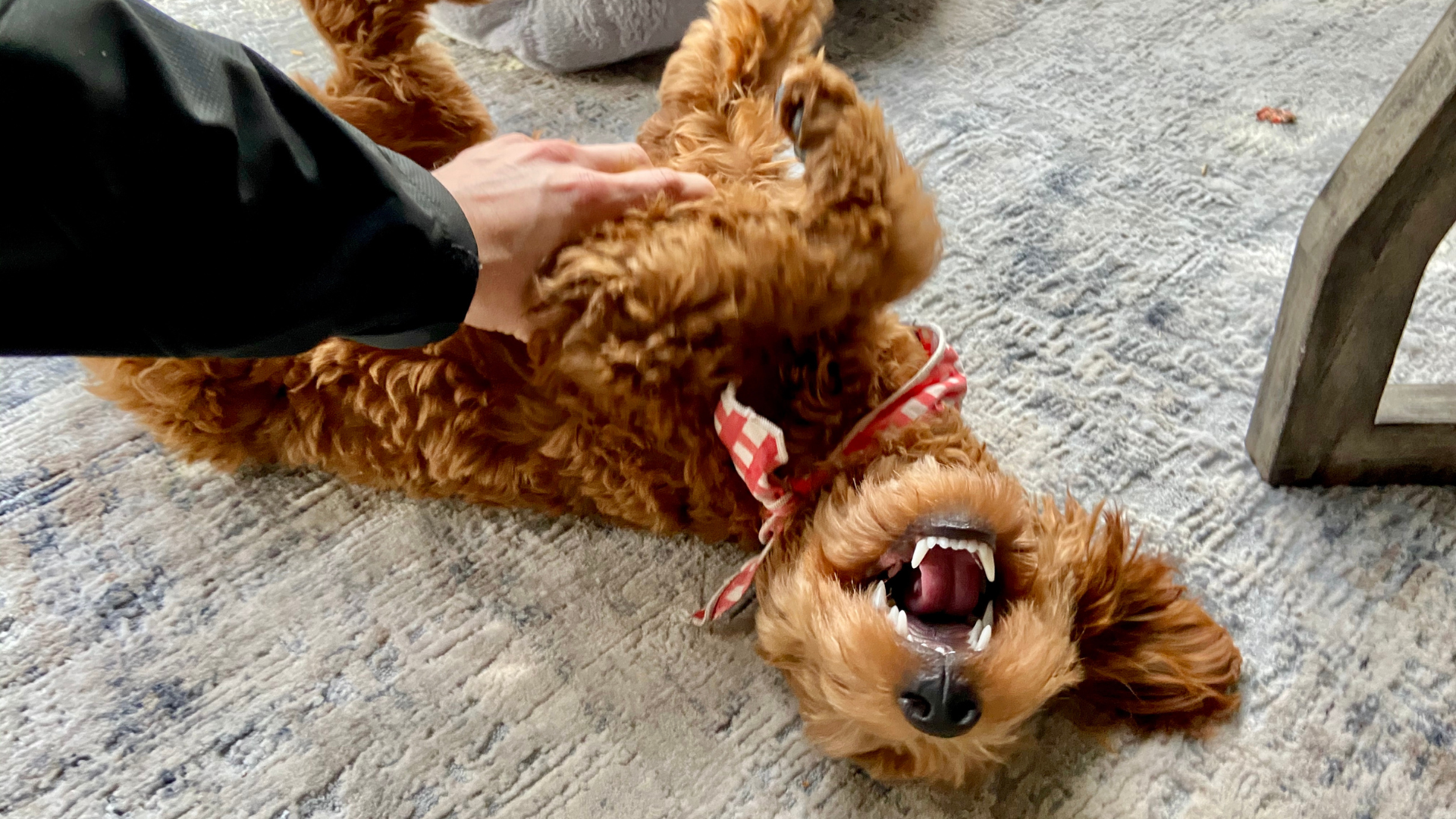
A dog sleeping belly-up or sprawled out with vulnerable areas exposed is often showing deep relaxation. The belly is one of the most sensitive parts of a dog’s body. When a dog exposes it during sleep, they are usually not worried about being threatened.
This position often signals trust. Your dog feels safe enough to let go.
You may see this position when your dog is sleeping in a familiar home, near a trusted person, or after a satisfying day of exercise and play. Puppies and younger dogs may do this often, but many adult dogs continue to sleep this way when they feel secure.
A sprawled-out dog can also be trying to cool down. Dogs may expose their belly to release heat, especially if the room is warm. So the meaning can be emotional, physical, or both.
Back Turned Toward You
Some owners wonder why their dog sleeps with their back facing them. It can look like rejection, but in many cases, it is the opposite.
A dog that turns their back to you while sleeping may be showing trust. They do not feel the need to watch you. They are comfortable letting you be behind them because they do not see you as a threat.
In some cases, this position may also reflect a protective instinct. Your dog may face outward toward the room, doorway, or hallway while keeping their body close to you. This allows them to rest while still monitoring the environment.
So if your dog sleeps with their back against you or facing away, do not assume they are being distant. They may be saying, “I trust you completely, and I am watching the world for us.”
Pressed Against You
Some dogs want full contact. They press against your leg, your back, your side, or even your chest. These dogs may want to feel connected with no space between you.
This can be a sign of devotion and attachment. Physical closeness reassures them. Your body becomes part of their resting environment.
A dog pressing into you is not always being “clingy” in a negative sense. In many cases, they simply enjoy the comfort of contact. They may be expressing affection in the most natural way they know.
However, context matters. If your dog suddenly becomes intensely attached, cannot settle without touching you, or seems anxious when separated, that may point to stress or separation-related anxiety. A loving habit becomes a concern when it appears alongside distress, restlessness, whining, pacing, destructive behavior, or sudden changes in appetite or energy.
Dogs May Take Protective Roles at Night
Another interesting point from the video is that dogs may choose sleeping spots based on instinctive protective roles. Even though modern dogs live in homes rather than wild packs, many still carry instincts linked to group safety.
Some dogs sleep near the door.
Some sleep at the foot of the bed.
Some sleep between their owner and the entrance.
Some sleep facing outward.
Some sleep near windows, hallways, or open spaces.
These choices may not be random. Your dog might be positioning themselves where they can monitor movement, sounds, or entry points. In their mind, they may be helping protect the group.
This can be especially noticeable in dogs with guardian tendencies, herding breeds, working breeds, or highly alert personalities. But even small companion dogs may take their nighttime “job” seriously.
If your dog sleeps at the foot of the bed, they may be choosing a spot that lets them stay close while still seeing the room. If they sleep by the bedroom door, they may be keeping track of the home’s main access point. If they sleep pressed against you but facing outward, they may be combining affection with vigilance.
Of course, sometimes a dog simply likes a particular mattress corner or cool floor tile. Still, repeated patterns can tell you something about your dog’s priorities.
Dogs Can Adjust Their Internal Clock to Match Yours
Dogs are often naturally active around dawn and dusk, but many bonded dogs adjust their routines to match their owners. If you go to bed at a certain time, wake up at a certain time, work from home, or follow a predictable morning schedule, your dog often learns that rhythm.
This is more than obedience. It is social adaptation.
Dogs are excellent routine readers. They learn the meaning of small cues:
You closing your laptop.
You turning off lights.
You brushing your teeth.
You changing into pajamas.
You setting an alarm.
You reaching for the leash in the morning.
Over time, your dog may begin preparing for sleep when you prepare for sleep. They may nap when the house becomes quiet. They may wake when your breathing changes or your alarm rings. They may even anticipate your morning routine before you move.
This adaptation shows how deeply dogs live in relationship with humans. They are not just sharing our homes. They are often syncing with our daily patterns.
That is why sudden routine disruption can affect sleep. Travel, guests, new work schedules, new pets, moving homes, or changes in household energy can all influence how and where your dog sleeps.
For a dog, routine is emotional structure. When the structure changes, sleep behavior may change too.
Dogs Notice Emotional and Physical Changes
One of the most meaningful ideas in the Dogunee video is that dogs may detect changes in their owners before the owners fully recognize them. Dogs are incredibly observant. They notice scent, posture, facial expressions, breathing, movement, and emotional tone.
Your dog spends a lot of time learning your baseline. They know what you smell like after a normal day. They know how you walk when you are relaxed. They know the difference between your calm voice and your stressed voice. They know how you breathe when you sleep peacefully and how you move when you are restless.
Because of this familiarity, even small changes can stand out to them.
If you are stressed, your dog may become more attentive. If you are sad, they may stay closer. If you are sick or physically uncomfortable, they may watch you more carefully or adjust their sleeping position.
Some dogs respond by pressing closer. Others become alert. Some may rest nearby but not touch. Others may seem unsettled because they know something is different but do not understand what.
This is one reason the nighttime bond can feel so powerful. During sleep, the house is quiet. Your dog has fewer distractions. They can focus on your breathing, movement, and scent. If something changes, they may notice.
This does not mean dogs can diagnose every problem or that every behavior has a serious meaning. But it does mean your dog is paying attention. Their closeness may be both affectionate and observant.
Sudden Changes in Sleep Habits Deserve Attention
If your dog has always slept beside you and suddenly stops, it can feel personal. Many owners worry their dog is upset with them or becoming distant. But a sudden change in sleep behavior is usually not about attitude. It is often communication.
Dogs cannot say, “My hip hurts,” or “The new sound in the hallway makes me nervous,” or “I do not feel safe in this room anymore.” Instead, they change behavior.
A dog who stops sleeping near you may be responding to physical discomfort, emotional stress, environmental changes, or a negative association with the sleep space.
Health and Pain
Pain is one of the most important possibilities to consider. A dog with joint pain, stomach discomfort, injury, skin irritation, dental pain, or general illness may choose to isolate.
This can come from instinct. Animals may hide vulnerability when they do not feel well. Your dog may not want to be touched, bumped, or moved during sleep. They may choose the floor because it feels cooler, firmer, or easier to access. They may avoid jumping onto the bed because their body hurts.
Watch for additional signs:
Limping or stiffness.
Difficulty jumping.
Restlessness at night.
Panting without obvious cause.
Loss of appetite.
Whining or sensitivity to touch.
Changes in bathroom habits.
Lower energy.
Hiding or unusual isolation.
If the sleep change is sudden, persistent, or paired with other symptoms, a veterinarian should be contacted.
Environmental Changes
Dogs are sensitive to changes in the home. A new baby, new pet, new partner, visiting guests, moving furniture, new sounds, construction noise, or even a different scent in the room can affect where they sleep.
A dog may avoid the bed if another pet has claimed the space. They may move away if they feel crowded. They may choose a hallway if they are monitoring unfamiliar activity. They may sleep closer to a door if they feel responsible for watching the household.
Even changes in cleaning products, laundry scent, or bedding can influence comfort. Dogs experience the world strongly through smell. A sleeping area that smells unfamiliar may feel less secure.
Keeping your dog’s favorite blankets, beds, and shared spaces fresh can help support comfort. For rugs and pet areas, Carpet Deodorizers can help refresh the spaces where dogs love to nap. For washable bedding, blankets, and covers, Laundry Powders can be part of a regular cleaning routine. For surfaces around the home, All Purpose Cleaners can help maintain a cleaner shared environment.
Emotional Associations
Sometimes dogs avoid a sleeping area because something unpleasant happened there. Maybe they were startled by a loud noise. Maybe another pet snapped at them. Maybe they slipped while jumping down. Maybe they were accidentally kicked during sleep. Maybe a tense argument happened nearby.
Dogs can connect places with experiences. If the bed, bedroom, or crate becomes associated with stress, they may choose a different place.
The solution is not to force them back. Instead, rebuild comfort gently. Offer a familiar blanket. Keep the room calm. Reward relaxed behavior. Give them choice. Let them return at their own pace.
What It Means When Your Dog Wants to Sleep in Your Room but Not on the Bed
Not every bonded dog wants to sleep directly beside their owner. Some prefer a dog bed on the floor, a rug near the bed, a crate with the door open, or a spot near the bedroom entrance.
This can still be a strong sign of attachment.
Your dog may want proximity without full contact. They may feel safer when they can move freely. They may get too warm on the bed. They may dislike being touched while asleep. Older dogs may find jumping difficult. Some dogs simply sleep better with their own space.
A dog who sleeps in the room is still choosing to be near you. They can hear you, smell you, and monitor the household. For many dogs, that is enough.
The goal should not be forcing a specific sleep arrangement. The goal should be creating a routine where both you and your dog rest well.
Should You Let Your Dog Sleep With You
Whether your dog should sleep in your bed depends on your lifestyle, health, sleep quality, and your dog’s behavior.
Sleeping together may support bonding and comfort for many people. It can help anxious dogs feel secure, and it can make owners feel less alone. For some households, it is a beautiful part of the relationship.
But it is not right for everyone.
You may want to reconsider bed sharing if:
Your dog disrupts your sleep every night.
Your dog guards the bed or growls at others.
Your dog has accidents in the bed.
Your dog has mobility issues and may fall.
You have allergies or health concerns.
Your dog becomes distressed when not allowed on the bed.
There are conflicts with other pets or people.
A healthy sleep setup should work for the whole household. If your dog cannot sleep in the bed, that does not mean your bond is weaker. A cozy dog bed nearby can provide closeness and structure while preserving everyone’s rest.
Shop the Product
Lemon freshness for every home.
Lavender calm for every home.
Orange energy for every home.
Mahogany warmth for every home.
Cherry blossom serenity for every home.
Cocoa butter comfort for every home.
Zesty freshness for every carpet.
How to Create a Calmer Sleep Environment for Your Dog
Your dog’s sleep habits are influenced by the emotional and physical environment of your home. A calm, clean, predictable space can help your dog feel safer at night.
Start with routine. Dogs often sleep better when bedtime follows a consistent pattern. A final potty break, dimmer lights, a calm voice, and a predictable sleeping area can all help signal that the day is ending.
Next, think about comfort. Your dog should have a soft, supportive place to rest, especially if they are older or have joint sensitivity. If they sleep on the bed, make sure they can get up and down safely. Stairs or a ramp may help small or senior dogs.
Then, consider scent. Dogs love familiar smells, but stale pet odors, heavily scented products, or unfamiliar bedding may make a space less appealing. Washing dog blankets, refreshing rugs, and cleaning shared areas can make the home feel more comfortable for everyone.
Helpful home care habits include:
Washing dog blankets and removable bed covers regularly with Laundry Powders.
Refreshing carpets, rugs, and pet lounging areas with Carpet Deodorizers.
Cleaning surfaces, floors, and everyday messes with All Purpose Cleaners.
You can also explore more pet-friendly home care tips on the Good Natured Brand blog.
How to Read Your Dog’s Sleep Behavior More Carefully
The best way to understand your dog’s sleep habits is to look for patterns rather than obsess over one night.
Ask yourself:
Where does my dog usually sleep?
Does my dog prefer contact or space?
Does my dog face the door, the room, or me?
Has anything changed recently?
Does my dog seem relaxed or restless?
Is the change sudden or gradual?
Are there signs of pain, stress, or illness?
A single unusual night may not mean much. Dogs change positions for many reasons, including temperature, digestion, noise, dreams, and comfort. But repeated changes are worth noting.
For example, if your dog normally sleeps pressed against you but now chooses the hallway every night, something may have shifted. If your dog usually sleeps through the night but now paces, pants, or moves from spot to spot, they may be uncomfortable. If your dog suddenly avoids the bedroom after a household change, they may be processing stress.
Behavior is communication. Your job is not to panic, but to listen.
The Bond Behind Bedtime
The reason dogs sleep beside us is not always simple. It can involve safety, warmth, routine, affection, protection, emotional awareness, and habit all at once. That is what makes the behavior so special.
When your dog curls beside you, they may be saying they trust you.
When they sprawl belly-up, they may be showing deep comfort.
When they turn their back to you, they may be expressing security.
When they press into you, they may be choosing closeness.
When they suddenly move away, they may be asking you to notice that something has changed.
The Dogunee video “If Your Dog Sleeps With You, They're Trying to Tell You This!” reminds us that dogs are always communicating, even when they are silent. Their sleep habits are part of the emotional language they share with us every day.
As pet parents, we do not need to overanalyze every movement, but we should stay observant. A dog’s nighttime routine can reveal how safe they feel, how bonded they are, and whether something in their health or environment needs attention.
A clean, comfortable home can support that sense of security. From cozy blankets washed with Laundry Powders, to refreshed rugs treated with Carpet Deodorizers, to shared spaces cleaned with All Purpose Cleaners, small home care habits can help create a space where both you and your dog can rest easier.
Because when your dog chooses to sleep near you, it is more than a bedtime habit. It is trust, comfort, and connection, expressed in the quietest part of the day.